
Beyond design-and-walk-away: why heap leach governance is catching up with tailings
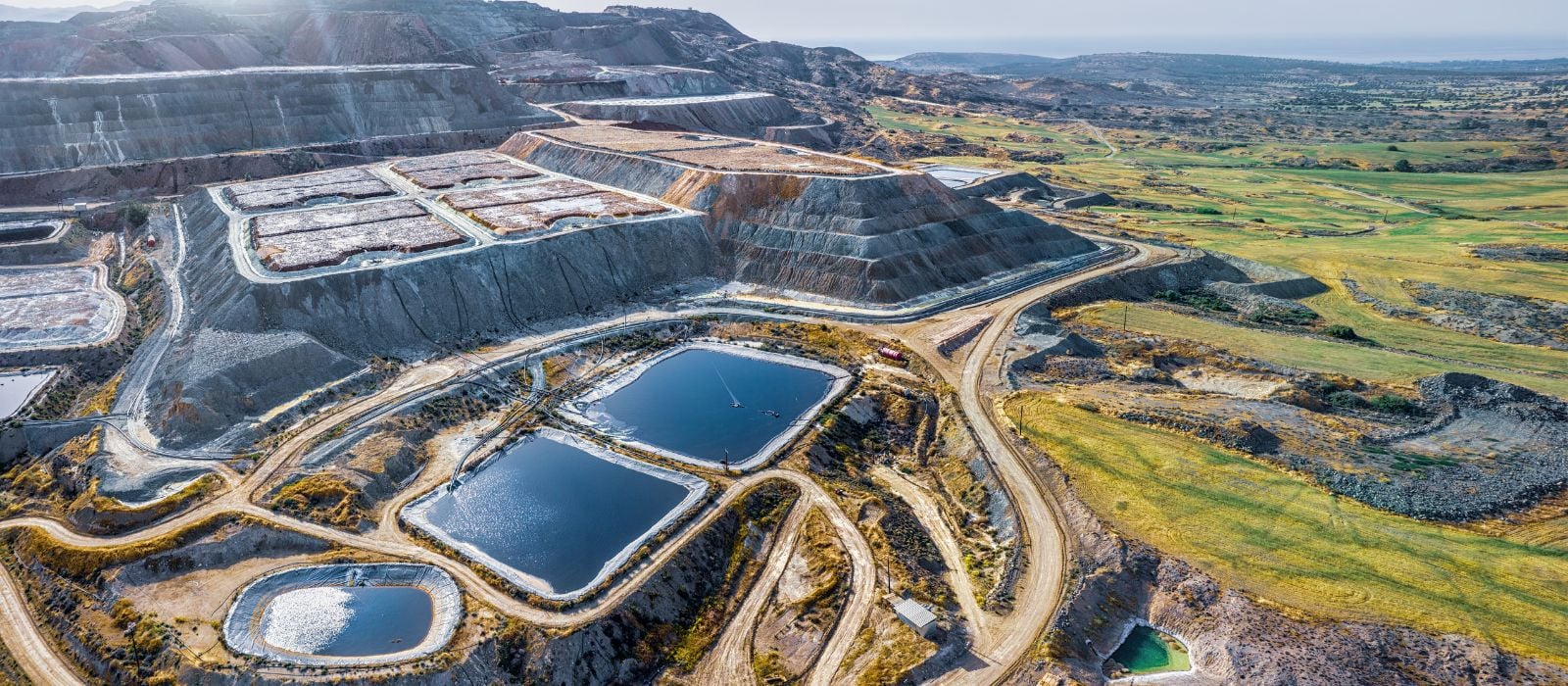
Image: AdobeStock.
Across the globe, heap leach failures are reshaping how miners, engineers and regulators think about operational risk, governance and accountability, with Australian projects increasingly facing tailings-style scrutiny over design, monitoring and lifecycle oversight.
Heap leach operations have long occupied an unusual space in the mining industry. Neither fully process infrastructure nor entirely aligned with traditional mine waste facilities, heap leach pads have historically avoided the level of scrutiny applied to tailings storage facilities.
That is changing rapidly.
A combination of high-profile global failures, growing investor awareness and tightening governance expectations is forcing miners, engineers and regulators to rethink how heap leach facilities are designed, operated and monitored. Increasingly, the sector is recognising that heap leach facilities carry many of the same lifecycle, stability and oversight risks that transformed global tailings governance over the past decade.
According to experts from SRK Consulting, the industry is now entering a transition period where governance, independent oversight and operational accountability are becoming just as important as metallurgy and economics.
SRK’s principal engineers Breese Burnley and Heather Thomson, and metallurgist and project management specialist Aaron Debono FAusIMM recently outlined why heap leach governance is emerging as one of mining’s next major operational risk frontiers.
Governance catching up
Heap leaching has been used globally for thousands of years, particularly in gold operations, but governance frameworks have often lagged behind operational growth.
Heather says Australia still lacks dedicated heap leach guidance or standards, leaving many projects reliant on adapted tailings or waste rock approaches.
“We don’t have any sort of guidance or standards in Australia about heap leach,” she says.
“Currently, it’s borrowing from tailings and waste rock as appropriate. It’s very operator and designer dependent.”
That flexibility is not necessarily a bad thing. The specialists stress that highly prescriptive regulation is not always suitable for facilities that are inherently site-specific. However, the absence of a mature governance framework creates variability in design standards, operational practices and oversight expectations.
Aaron considers heap leach operations have historically been viewed differently because they were treated primarily as process infrastructure rather than high-consequence mine waste facilities.
“The heaps are generally considered more process infrastructure and landforms compared with tailings,” he says.
That distinction helped shape a lower-risk perception for many years. But recent failures globally have challenged those assumptions.
Breese says the industry’s evolution is following a familiar pattern.
“Everything we do is driven by a failure at some point,” he says.
Lessons from global failures
Two failures shape the conversation throughout, one in Türkiye and one in Canada’s Yukon.
Those events have become inflection points for the industry, much like major tailings failures reshaped governance expectations worldwide.
Historically, heap leach facilities were considered less catastrophic because they generally contained lower water volumes than conventional tailings facilities. However, the experts warn that assumption can create complacency.
“A heap leach pad is meant to leach; therefore it’s not supposed to be saturated,” Breese says.
“But we’ve seen some examples obviously that haven’t quite met that standard.”
Heather says water remains the defining variable in both tailings and heap leach risk.
“Water drives everything,” she says.
That includes seepage, stability, saturation, liner performance, downstream consequences and environmental exposure.
The panel repeatedly emphasises that many failures are not attributable to a single design flaw, but rather a combination of issues developing over long operational periods.
Breese says heap leach facilities can evolve significantly throughout their lives through expansions, ownership changes and operational modifications.
“One of the biggest failures the industry has recently witnessed had a long history and a long string of design additions and ownership changes,” he says.
That gradual erosion of corporate memory can become a major risk factor if facilities are not actively governed over their full lifecycle.
The rise of the Engineer of Record
One of the strongest themes emerging from the discussion is the growing importance of independent technical oversight and the Engineer of Record (EOR) concept.
In tailings management, the EOR model has become increasingly common following the development of the Global Industry Standard on Tailings Management (GISTM). Heap leach operations may now be heading in the same direction.
Breese says heap leach engineering has traditionally followed a far less integrated approach.
“Up until now, the approach has basically been to design it and leave it to the operator to manage,” he says.
That model is becoming increasingly difficult to justify.
The panel argues that continuous oversight across design, construction, operation and closure is essential for maintaining long-term facility integrity.
Aaron says independent review is especially important as projects transition between ownership groups.
“The corporate memory is very short, so your previous design assumptions get lost,” he says.
Australia versus Nevada
The discussion also highlights the contrast between Australia’s emerging governance framework and Nevada’s more mature regulatory environment.
Nevada has operated heap leach facilities extensively for decades and has developed detailed requirements around water protection, closure planning and design criteria.
Breese says one of Nevada’s strengths is balancing technical requirements with flexibility.
“We’ve got minimum design criteria, closure standards and some specificity in things like slopes and factors of safety,” he says.
“But where they actually get it right is they allow for site-specific variations in the regulations.”
That flexibility is critical because no two heap leach operations are identical.
“Everything is site specific,” Breese says. “There are no shortcuts to characterisation and the design process.”
Heather agrees, noting that even neighbouring projects can require substantially different approaches depending on geology, ore characteristics, topography and operational drivers.
The panel also points to Nevada’s requirement for closure planning from the outset as a significant advantage.
“Nevada requires what’s called a tentative plan for permanent closure as part of the initial application,” Breese says.
Closure can no longer be an afterthought
Closure planning emerges as another major governance theme throughout the discussion.
The experts argue that many facilities are still designed primarily for short-term operational efficiency without sufficient consideration of long-term rehabilitation and liability.
Breese says the consequences often become apparent years later.
“We like to think that we design for closure because it sounds really cool, but as an industry we don’t often actually do that,” he says.
He describes examples where operators maximised ore placement with little consideration for how facilities would ultimately be stabilised and rehabilitated.
“Keep in mind, if you plan ahead, closure will be cheaper in the long run,” he says.
Progressive closure and integrated lifecycle planning are increasingly viewed as essential components of modern heap leach governance.
Monitoring, data and the AI question
The conversation also explores the growing role of monitoring technology, automation and artificial intelligence in managing heap leach operations.
Aaron notes the industry now has access to far more operational data than ever before, including drone surveys, water level monitoring, drainage performance data, stability monitoring systems and operational performance metrics.
The challenge is turning that information into actionable insight.
“There’s been so much advancement in technology to simplify data collection, compilation and analysis and have a lot more real-time data,” he says.
“The question is, what do you do with all that data?”
Rather than replacing engineers, the panel sees AI primarily as a tool for processing large datasets and identifying anomalies or emerging trends.
Breese says AI-driven systems could support automated trigger action response plans similar to those increasingly used in tailings management.
“If you do see a water level that’s out of the norm, it could be automatically monitored and then verified by a human,” he says.
Importantly, the panel remains cautious about over-reliance on remote monitoring and automation.
Heather says the industry learned during COVID that physical site presence remains irreplaceable.
“When you go out there and specify the dirt, you learn an awful lot,” she says.
Aaron agrees.
“You still need a human on the end of it to sanity check,” he says.
A shift in industry mindset
Perhaps the clearest message from the discussion is that heap leach governance is no longer optional.
As more Australian projects move toward development, operators are likely to face increasing scrutiny from investors, insurers, regulators, independent reviewers and communities.
The panel believes the industry’s mindset is already beginning to shift.
For Breese, the path forward is ultimately straightforward.
“Don’t cut corners,” he says. “You end up paying more in the end for the problems that you create, and it’s just not that hard to do it right.”
“There is definitely a requirement for more formalised independent oversight,” Aaron adds.
Asked what single change would most improve Australian heap leach standards, Breese does not hesitate. “External review.”
About the contributors
Heather Thomson is a principal civil engineer in SRK Consulting’s tailings group, based in Perth. She specialises in the design, operation and closure of mine waste facilities, including tailings storage facilities and heap leach pads.
Aaron Debono FAusIMM is a metallurgist and project manager with more than 30 years of experience across gold, iron ore and multi-commodity operations. He has held operational, supervisory and corporate roles with a range of producers, working across the full project lifecycle from commissioning through to closure.
Breese Burnley is a principal civil geotechnical engineer with SRK Consulting based in Reno, Nevada. He specialises in tailings, heap leach and mine closure projects, with extensive experience in the design, operational review and forensic investigation of mine waste facilities across North America and internationally.