
From measurement to action: improving mill performance through better process visibility
Mineral processing plants face growing pressure to maximise recovery, improve energy efficiency and meet increasingly stringent environmental expectations. At the same time, many operations are managing more complex ore bodies, ageing infrastructure and limited specialist resources.
Most sites already collect large volumes of process data. The challenge is determining which information matters, understanding what it means and acting on it quickly enough to improve outcomes.
Modern measurement technology is changing the way plants approach this challenge. Rather than simply recording process conditions, measurement systems can help operators identify changes earlier, investigate the causes behind performance variation and respond with greater confidence.
Across grinding, flotation, environmental monitoring and asset reliability, improved visibility can support more informed operational decision-making.
Understanding changes before they impact recovery
Particle size remains one of the most influential variables in mineral processing. It directly affects grinding efficiency, classification performance, flotation response and ultimately recovery.
However, many operations still rely on laboratory testing and manual sampling to assess particle size distribution. While valuable, these methods can introduce delays between a process change occurring and operators receiving the information needed to respond.
As plants seek faster decision-making, interest in continuous particle size measurement continues to grow.
Image-based analysis is one approach that can provide continuous information about particle size and shape directly within slurry streams. For example, Endress+Hauser's SOPAT technology can be installed at locations such as mill discharge, cyclone overflow, flotation feed or regrind circuits to provide visibility into changing process conditions without waiting for laboratory results.
For operators, continuous measurement can enable earlier identification of grind size variation and provide additional information for investigating classification performance and factors influencing flotation stability and recovery. Instead of simply observing a change in plant performance, operators have another source of information to help investigate what may be driving it.
This can provide a more complete picture of process conditions and help operators maintain stable operation.
Looking beyond the process
While grinding and flotation performance are critical, operational visibility increasingly extends beyond the processing circuit.
Environmental monitoring has become a key component of plant operations, supporting compliance obligations as well as the management of environmental and workplace conditions.
Dust monitoring is one example. Rising particulate levels can indicate issues such as filter leakage, abnormal loading conditions or changes in equipment performance. Identifying these trends early can give operators an opportunity to investigate before they develop into larger operational or environmental concerns.
Continuous particulate measurement can therefore contribute to this broader picture of plant conditions. The Endress+Hauser DUSTHUNTER SP30, for example, is designed for applications including baghouses, crushing plants, conveyors and material transfer points. Real-time dust concentration data can help operators identify changing conditions while supporting environmental monitoring and worker safety objectives.
Process gas analysis provides another source of information across applications such as roasters, smelters, acid plants and emissions monitoring systems.
The Endress+Hauser MCS200HW emissions monitoring system provides continuous multi-component gas measurement, including gases such as SO₂, NOx, CO, CO₂ and O₂. This information can support process monitoring and emissions reporting by providing operators with visibility into changing process conditions.
As sustainability targets and reporting requirements continue to evolve, reliable gas and dust measurement forms part of the information operators use when making operational and environmental decisions.
Reliable data starts with reliable instruments
Even the best process data has limited value if there is uncertainty around the instruments generating it.
A drifting sensor, degraded analyser or undetected device issue can affect process control decisions, maintenance strategies and confidence in reporting. For remote operations, where specialist instrumentation support may not always be available onsite, maintaining measurement reliability can be particularly challenging.
This has contributed to interest in condition-based maintenance approaches supported by digital diagnostics and remote support capabilities.
Remote monitoring of instrument health can provide diagnostic information and information on measurement quality, helping sites identify potential device issues and target maintenance intervention. Endress+Hauser Remote Services is one example of this approach, providing visibility into device condition to support troubleshooting and maintenance decisions.
For operations seeking to improve reliability and make efficient use of maintenance resources, understanding instrument health is an important part of maintaining confidence in the measurements used to operate the plant.
Connecting process, environment and reliability
Historically, process optimisation, environmental performance and maintenance have often been managed independently.
Increasingly, however, these areas are interconnected.
A stable process depends on reliable measurements. Environmental performance benefits from early visibility of changing conditions. Effective maintenance decisions depend on confidence in the health and quality of measurement systems.
Technologies for particle size measurement, particulate and gas monitoring, and instrument diagnostics can provide visibility across these areas, contributing to a more complete understanding of plant performance.
As operations become more complex, the ability to identify changes earlier and respond effectively becomes increasingly important.
Better measurement alone does not improve performance. Its value comes from transforming measurement data into information that supports faster decisions, more stable operation and greater confidence across the plant.
For mill operators, the goal remains straightforward: earlier visibility, faster action and better-informed decisions.
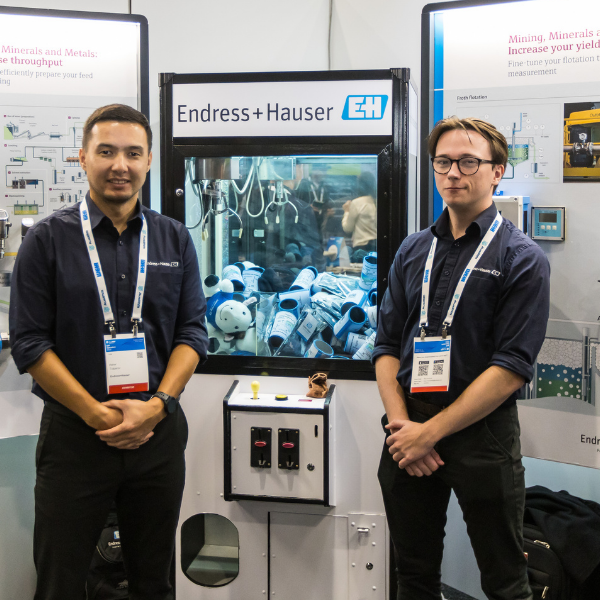
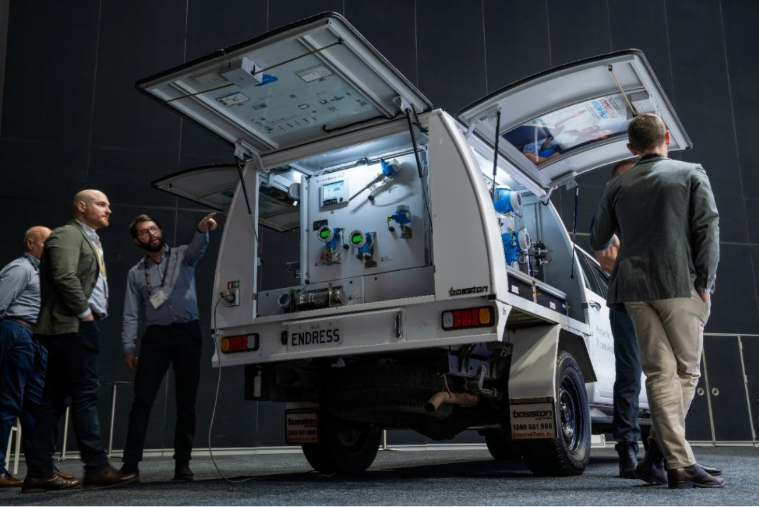
Endress + Hauser showcasing their work at the recent Mill Ops conference.
Explore upcoming industry events by visting the Endress+Hauser homepage here