
How 'super fungi' can detoxify waste and recover critical minerals
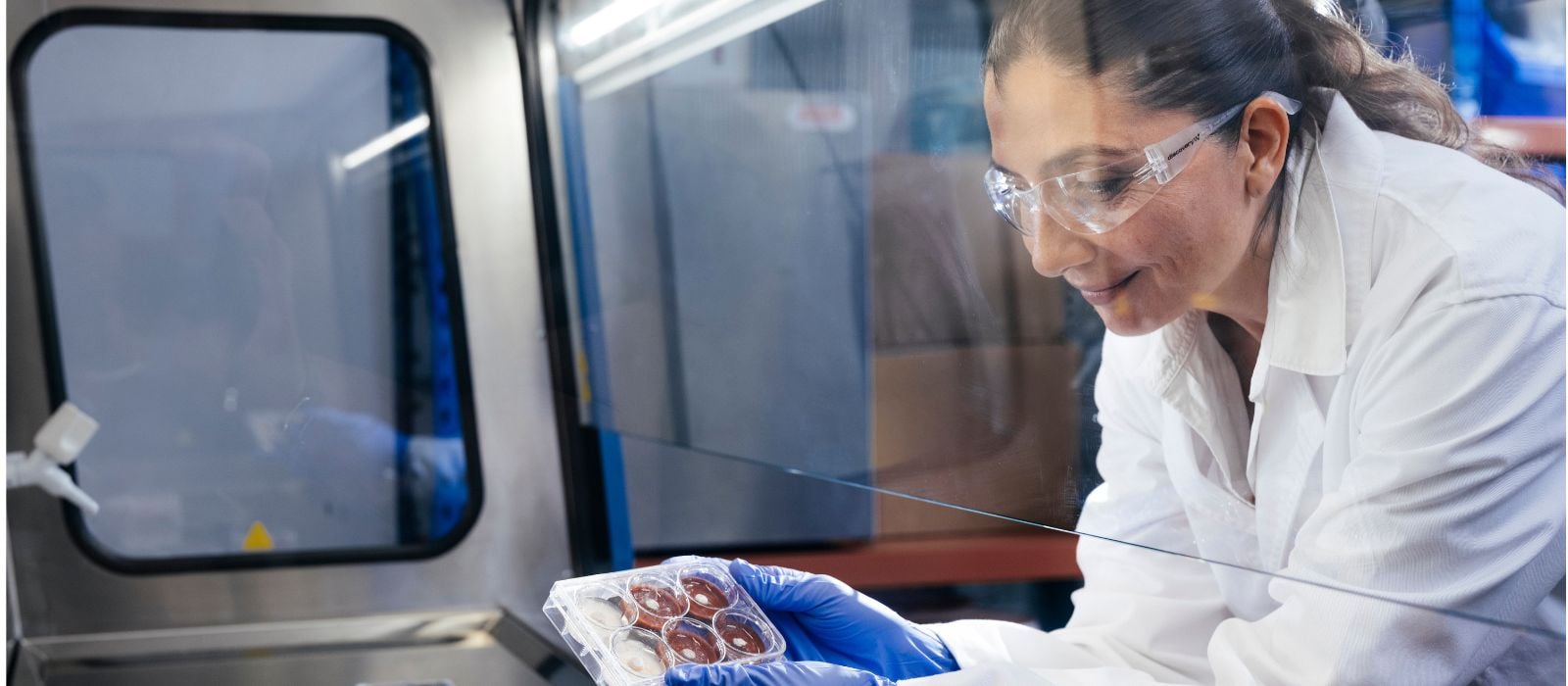
Dr Denys Villa Gomez in the lab with the so-called 'super fungi' that has the potential to recover minerals and clean up mine tailings. Photo: UQ.
Australia sits on some of the world’s most valuable reserves of critical minerals and metals. Extracting these resources will be a major part of the transition to electrification.
At the same time the mining industry is being increasingly scrutinised for a growing, expensive legacy of mine waste. These tailings are not only toxic but filled with valuable critical minerals.
Conventional extraction methods are acid-heavy, carbon-intensive and expensive. But what if the solution to both extraction and detoxification was already living in the waste?
Mining’s waste problem
Australia’s mines produce hundreds of millions of tonnes of toxic waste every year. This environmental hazard is a risk to waterways, wildlife, nearby communities as well as workers.
But a lot of this waste is rich in metals that have been discarded through the extraction process. One of the most well-known examples is the red mud created from bauxite residue. It is a multi-million tonne waste problem that is also rich in rare earths like vanadium and scandium.
Currently, the leaching extraction process relies on acids and solvents that are expensive, carbon intense and increasingly out of step with corporate environmental, social and governance expectations.
It’s a bird, it’s a plane, it’s – super fungi!
But what if we could solve this problem with a supercharged organism that already lives in extreme, toxic mining environments?
My team at The University of Queensland are working on taking a specific fungus that lives in mine waste. We take multiple fungi strains, and, like Spider-Man or The Incredible Hulk, we expose them to toxic conditions. The strains that survive are selected for continued development. We call this Adaptive Laboratory Evolution, and it is creating the super fungi that we hope will be used to clean up mine tailings.
At the moment we are using bioreactors based in UQ’s Biosustainability Hub to put this into action. We put a feedstock into the reactor along with the fungi and tailings. The fungus eats the feedstock, creating organic acids that leach critical minerals from the tailings. It has already been highly successful at extracting vanadium and scandium.
“In the future, it’s hoped we could deploy these fungi directly at mine sites, recovering minerals while helping remediate the land at the same time”
We are already working with some of the world’s biggest mining companies to take this from the lab to reality. That could be fungi-sourced organic acids available for mines, or in-situ bioleaching at tailing facilities. The fact that some of these companies are already at the table tells you something about where this technology is headed.
Two birds with one stone
This is a solution that has the potential to transform how we deal with mine waste. It is not only a way to clean up the vast amounts of tailings that the sector is already dealing with, but an economic benefit too.
Critical minerals are increasingly important for the energy transition, electronics production and making modern healthcare equipment.
Bioleaching is an opportunity to not just improve how we handle the mine waste, but to access a new economic stream out of that waste.
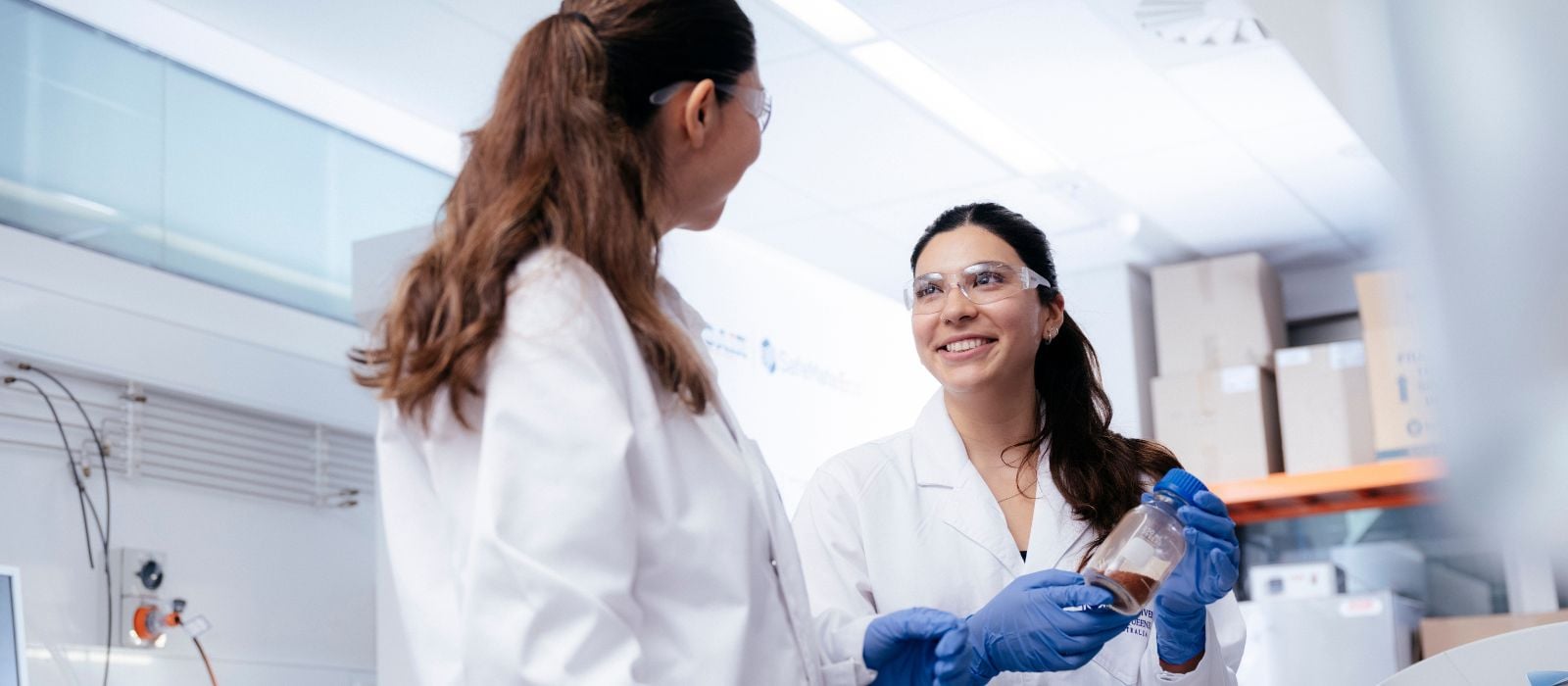
Dr Villa Gomez and PhD candidate Fernanda Soto. Photo: UQ.
The tip of the iceberg
This type of technology is just the start for synthetic biological mining technology. It is part of a broad suite of research into how biological processes can help industrial processes.
Researchers from my team and others are working at UQ’s new Biosustainability Hub to use biological processes to create fuels, chemicals and even food products. Projects range from mining waste to greenhouse gas conversion. These projects are already working with industry partners to enable larger field scale trials. The coming years will take this from the development to reality.
“The Hub provides companies with a bridge from fundamental discovery to real-world application.”
Waste not, want not
The need for more critical minerals is only getting greater, while tailings remain one of mining’s biggest environmental challenges. Bioleaching technology is an opportunity to address both these problems at once. These technologies are moving from the lab to the field, with industry partners already involved. It is an opportunity to not only open new economic streams but also manage one of the industry’s biggest ESG challenges.