
IMARC 2026 puts spotlight on mining’s Mission Critical

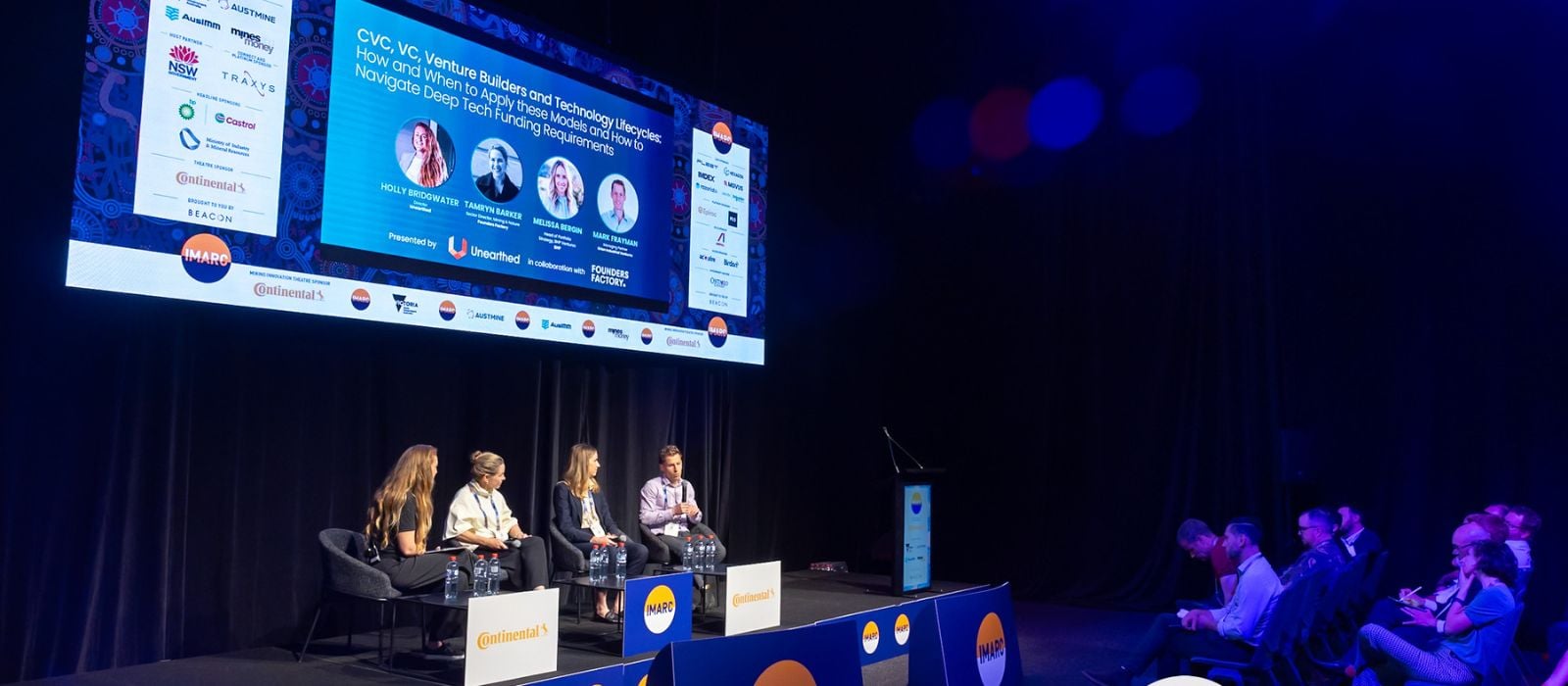
Mining’s Mission Critical, to responsibly deliver vital materials, will take centre stage at this year’s International Mining and Resources Conference + Expo (IMARC) as the industry pivots strategically and operationally to align trillions of dollars of new investment with the world’s economic, technological and environmental trajectory.
Returning October 27-29 to the ICC Sydney after a record 2025 event, IMARC has invited more than 500 mining, finance and government leaders from all over the world to address vital issues and trends around this year’s theme, 'From Strategy to Execution: Delivering Responsible, Resilient and Viable Resources.' AusIMM is a Founding Partner of IMARC.
The 2026 program features speakers such as Australia’s resources minister Madeleine King, Agnico Eagle Australia’s Felicia Binks FAusIMM, EMR Capital's Owen Hegarty HonFAusIMM, GMG Zero Entry Mining Workgroup's Dr Joe Cronin FAusIMM, BHP innovation strategy head Marley Palin, Fortescue integrated operations director Katie Charuga and Perenti CEO Vanessa Torres MAusIMM, who will give attendees unique insights into:
- a rapidly changing global mineral processing and refining landscape
- US and European resources and supply chain resets
- crucial mine and downstream funding trends
- markets and policies altering the future of mineral supply
- leaders in permitting and regulatory reform
- project pipeline opportunities and constraints.
Strategy to execution
Getting capital, workforce, technology and ESG resilience calls right is crucial for mining and metals companies striving to unlock growth and reinforce their long-term competitiveness.
Industry-wide, up to US$5.4 trillion of capital expenditure could be needed to avoid looming minerals and metals supply shortfalls, IMARC audiences have heard. However, as global consulting firm ERM revealed at last year’s conference, nearly two-thirds of mining projects face delays and the average time taken to progress a discovery to an operation has increased by 40% in the past decade.
“Developing mines is becoming increasingly challenging, at a time when society’s need for critical minerals is accelerating,” ERM mining leader Louise Pearce says. “To meet the required pace and scale of supply, and avoid a critical minerals deficit, a fundamental shift is needed.”
Paul Mitchell, global mining & metals leader at EY, says moving beyond traditional transactional models will be a critical part of ensuring projects are delivered on time and on schedule.
“Investor confidence is affected by the performance of capital projects and caution is escalating given the geopolitical landscape,” he says.
“With consistent cost and time overruns we run the risk of losing access to capital given energy security and defence are essentially competing for the same capital. Without a clear shift towards more disciplined capital expenditure, with a greater focus on innovation, cost control and execution certainty, we will lose the race.”
In a world of increasing mine development constraints, Australia itself had come to a critical juncture, the MCA’s Tania Constable said this month.
“Global capital makes decisions based on delivery, not intent,” she told a federal parliamentary inquiry into factors shaping social licence and economic development outcomes in critical minerals projects across Australia.
“In Australia it now takes on average around 17 years to bring a mine from discovery to production, with most of that time spent before construction even begins.
“In other jurisdictions reforms have brought time frames down dramatically, attracting tens of billions of dollars in new investment as a result. The difference is not geology. It is the ability to move from decision to delivery. And investors respond accordingly. Where timelines are uncertain, capital pricing rises, projects stall and in many cases investment shifts elsewhere.
“That’s the practical reality of competing for global investment.”
Underlining the enduring value of that investment New South Wales Minerals Council CEO Stephen Galilee said the council’s latest annual survey of member companies had the industry’s A$22 billion local spend, 35,100 full-time-equivalent employees and support for more than 7500 NSW businesses at record levels. State-based spending was double the outlay of a decade ago.
“In the current climate of economic uncertainty it is vital that governments support industries like mining that deliver such stability to the economy,” Galilee says.
IMARC uniquely draws operators, investors, governments and innovators together to connect projects and capital and accelerate adoption of important new technologies.
Sherene Asnasyous, IMARC event director – content & partnerships, says new partnerships and government participation are reinforcing IMARC’s status as a truly global industry-led mining event.
“IMARC is looking forward to welcoming a stronger EU delegation this October following the newly announced EU–Australia trade agreement and security partnership, which marks a step change in global collaboration, deepening ties across critical minerals, supply chains and defence cooperation."
Tickets for IMARC 2026 are on sale now, and AusIMM members are eligible for exclusive member pricing on delegate passes. A delegate pass will provide full access to the conference, the Traxys IMARC Connect meeting platform, as well as networking events. Alternatively, a free Expo Visitor Pass grants access to the exhibition floor and select conference theatres.
Eligible personnel from mining companies and mining contractors across operational, technical, and leadership roles can attend the full conference and exhibition for free with a Mining Guest Pass.
Find out more at www.imarcglobal.com.