
Investing in the future of Australian mining
As mining equipment becomes larger and more technologically advanced, the need for skilled operators and maintenance personnel continues to grow. Training plays an important role in ensuring workers can safely and effectively operate, maintain and support increasingly complex mining fleets.
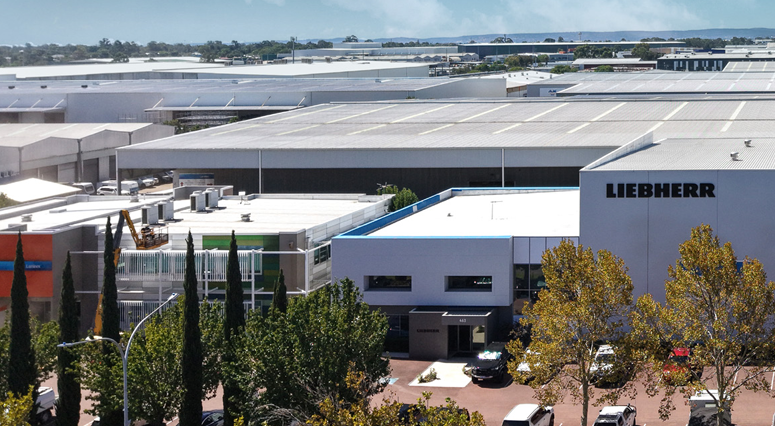
Australia is a significant market for Liebherr Mining equipment, including large excavators, mining dozers and haul trucks. With fleet numbers expected to increase over coming years, demand for training is also expected to rise. To help support this need, Liebherr-Australia has expanded its training capabilities in Western Australia through the development of a dedicated training facility in Perth.
‘Our training capabilities have always been world-class,’ says Trent Wehr, Managing Director, Mining, Liebherr-Australia. ‘But with the exceptional growth that Liebherr-Australia is experiencing, we needed to expand our training programs and facilities so we can continue to provide our people and our customers with the high-quality experiences they have come to expect from us.’
Training to support workforce capability
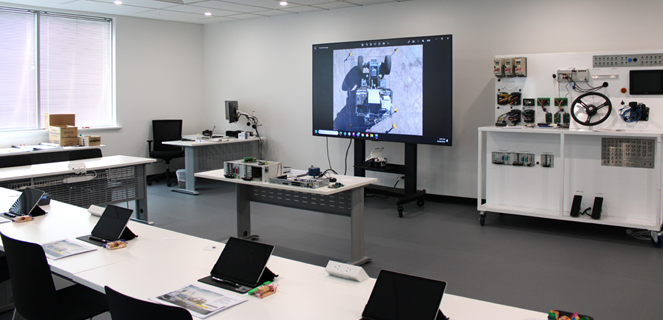
Liebherr-Australia's training programs combine classroom learning, simulation and practical machine-based instruction. The programs cover equipment used across the Australian market and are delivered to both customer personnel and the company's own support teams.
Training offerings include operator development programs, technical maintenance training and specialised courses for sites using Liebherr engines or autonomous mining technologies.
A key aspect of the company's approach is tailoring programs to site-specific requirements. Training needs are assessed according to operational requirements, equipment types, relevant safety standards and workforce capability requirements. From this assessment, training programs can be developed to address identified skills gaps and operational challenges.
For customer support personnel, training focuses on developing advanced technical expertise. These teams assist mining operations with complex maintenance and reliability challenges and require extensive knowledge of equipment systems, engines and drive technologies.
‘The idea was always that anyone certified to maintain or operate Liebherr equipment in Australia will have the same certification as someone who trains at our production facilities overseas. The only way to do that is to ensure that the experience here is the same as it is over there,’ says Pete Wilson, National Training Manager, Mining, Liebherr-Australia.
Responding to industry growth
Mining workforces are often dispersed across regional and remote operations, creating logistical challenges when delivering training. In Australia, training may be delivered online, at support branches, on customer sites or through a combination of these approaches.
As fleet numbers have grown, Liebherr-Australia identified the need for additional training infrastructure to complement its existing training network. The company's Perth facility was established to support this growing demand and provide a central training location for personnel working across Western Australia's mining sector.
According to Wilson, Perth's position as a major transport hub for the state's fly-in, fly-out workforce was an important consideration.
‘Western Australia is the biggest mining jurisdiction in Australia. However, most of the workers are fly-in, fly-out due to the remote locations of a lot of the mines in the state. The vast majority of these workers' journeys stop in Perth before continuing onto the smaller airports in or around the mines, making Perth an easy place for them to get to for training,’ he says.
Combining theory and practical learning
The Perth facility includes training rooms for theoretical instruction and a workshop designed to support practical learning activities. Interactive technology allows training to move between classroom and workshop environments, helping participants apply theoretical concepts in practical settings.
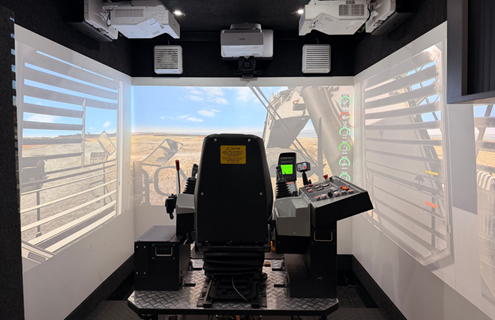
The workshop houses training equipment including physical engines, simulation systems and truck simulators used for technical training. Current assets include D9512 and D9812 engines in both physical and simulated formats, with additional equipment planned for future installation.
By combining classroom instruction, simulation and hands-on experience, facilities such as these aim to support the ongoing development of technical and operational skills across Australia's mining workforce.