
Keeping short-term underground mine plans aligned with operating reality
Underground mine planning is often described as a sequence of progressively detailed planning horizons. Long-term plans establish strategic direction, medium-term plans translate strategy into achievable production objectives, and short-term plans define the additional activities, resources, sequences and priorities required to execute that strategy.
The challenge is that execution does not occur in the stable environment assumed by many schedules. Equipment availability changes, additional work is identified, ground conditions can differ from expectations, activities take longer than planned and operational priorities shift. Schedules can also be rigid, with defined orders that must be fully completed before the next activity can start. A schedule may therefore be valid when developed but increasingly diverge from operating reality as conditions change.
This disconnect between plan and execution is not unique to any one operation. Åstrand, Johansson and Greberg describe scheduling as the critical link between mine planning and operational control (Åstrand et al, 2018). At the operational level, planners must coordinate equipment, personnel, locations and activities while responding to uncertainty and numerous interacting constraints.
The problem, therefore, is not simply producing the initial schedule. The problem is maintaining a useful schedule as operating conditions change.
What integrated planning teaches us
A practical example can be found in the integrated planning process described for the Oyu Tolgoi Underground Project (Fowke and Groeneveld, 2018).
The process spans annual, quarterly, monthly, weekly and daily horizons. Annual plans focus on testing major system capacities. Quarterly planning resolves underground time and space constraints. Monthly planning aligns people, equipment and materials. Weekly planning determines the sequencing of logistics and development cycles, while daily planning focuses on defining executable shift plans and adjusting activities to achieve weekly objectives.
What is notable is not simply the number of planning horizons. The process demonstrates that planning detail increases as execution approaches; however, an organisation does not necessarily become more confident in the plan. This reflects an important operational reality. A single schedule cannot carry sufficient detail to support decisions across all time horizons. Instead, planning becomes an iterative process through which assumptions, constraints and priorities are repeatedly reassessed.
The unresolved gap as variability intensifies
Integrated planning processes provide a structured way to manage variability. They establish planning horizons, coordination mechanisms and review processes that progressively convert strategic intent into executable work.
However, a practical question remains: when new information emerges between planning or operational reviews, or an opportunity arises to improve production, how should engineers evaluate the consequences?
Understanding this gap is important because it shifts the conversation away from schedule generation and towards schedule adaptation.
Methods to bridge the gap
A substantial body of research has been developed to improve underground scheduling and planning.
Integrated planning frameworks focus on coordination, communication and alignment across planning horizons. The Oyu Tolgoi integrated planning process is an example of this approach, with planning progressing from annual, quarterly and monthly horizons to weekly and daily plans (Fowke and Groeneveld, 2018). As the planning horizon shortens, the cadence of planning and review increases, enabling constraints, conflicts and emerging issues to be identified and addressed earlier as execution approaches.
Optimisation and decision-support models recognise that operational planning involves numerous interdependent decisions involving workers, equipment, work sites and production requirements. Campeau and Gamache (2020) describe a short-term planning model demonstrating how optimisation can be used to test operational scenarios, evaluate alternative resource allocations and support the transition from medium-term objectives to executable short-term plans. The study argues that the complexity of underground operations can exceed what can practically be assessed without structured decision-support tools.
Stochastic scheduling approaches incorporate uncertainty directly within scheduling models (Cao et al, 2026). These methods acknowledge that durations, costs and production outcomes may vary and can be useful for evaluating schedule robustness under different conditions. Rather than assuming a single outcome, stochastic models evaluate a range of possible outcomes and their likelihood. This can help planners assess the probability of delays, resource conflicts and production disruptions, allowing schedule risk to be considered alongside schedule performance.
These approaches are not competing solutions. Rather, they address different aspects of the same planning problem. Together, they demonstrate the importance of constraints, uncertainty, resource interactions and scenario analysis. They also suggest that schedule quality cannot be assessed purely through activity durations or production targets.
Can scenario evaluation be a practical response within an integrated planning framework?
When variability increases as planning horizons shorten, a practical requirement emerges: planners need a way to evaluate how specific operational changes may affect production volumes and the resources available to the mine.
One approach is constraint-based scenario evaluation, which involves creating specific scenarios that model operational challenges faced on site. In this context, options are not governed solely by durations. They are also governed by the resources, dependencies, locations, priorities and operating rules that determine whether work can occur.
This changes the purpose of the schedule. Rather than acting only as a statement of intended production, it can also act as a decision-support model.
A revised priority can be tested against the same equipment limitations as the baseline schedule. Additional work can be introduced with its associated resource demand. Alternative production sequences can be evaluated using a consistent set of assumptions.
The objective is not to predict exactly what will happen. Rather, it is to understand how different assumptions may affect mine resources and provide a transparent basis for operational decisions.
Case study: Testing alternative stope sequencing strategies in a production environment
The following workflow was developed for a Brazilian underground gold operation using sublevel stoping and producing approximately 165 000 t per month. The site was using an integrated planning process through to monthly production forecasts. Its short-term planners needed greater flexibility to evaluate and modify standard stope sequences without manually rebuilding schedule dependencies. The existing process required significant manual intervention and troubleshooting.
The standard production sequence requires long-hole drilling and cable bolting of the entire stope before blasting and mucking can proceed. However, in some circumstances, waiting for the entire stope to be drilled and cable bolted can delay production. The site wanted to consider different planning scenarios, such as splitting selected stopes into sections to stage production activities and understand the potential impact on available mine resources and production.
In the baseline approach, identified as Sequence A, the full stope length is drilled and cable bolted before production begins. This provides a clear preparation sequence, but it can delay first ore when the operation cannot wait for the entire stope to be prepared.
Sequence B considers an alternative approach in which only the portion of the stope required to commence production is initially drilled and cable bolted, including the additional safety rings required by the operation. Blasting and mucking can then begin in the prepared section, while drilling equipment is subsequently scheduled to return and complete the remaining portion of the stope.
Scenario setup to test alternative sequences
The mine schedule represents the production cycle through configurable processes for long-hole drilling, cable bolting, blasting, mucking and paste filling across the mine. A set of user-defined solid attributes for blasting, drilling and cable bolting groups is then created. These attributes act as scheduling rules that determine how the production sequence is applied to each stope. The stopes are divided into blasting sequences that can vary in size according to geometry and location within the mine.
Mining solids added to the project are attributed according to their production sequence. By default, each stope solid is assigned Sequence A; this can be changed by updating the relevant attribute values. When the schedule is re-run, the mining sequence is updated accordingly.
Attributes are also created for drilling groups, controlling whether a stope is fully drilled before production blasting commences or whether drilling can be staged. In the staged approach, an initial set of rings, including three mandatory safety rings, is drilled to enable earlier production, with the remaining drilling completed after the first section has been mucked. This allows planners to evaluate the trade-off between accelerated ore availability and the additional equipment utilisation required to return and complete the stope. A cable bolting group is configured in a similar way.
Equipment priorities and operational constraints were configured for each production unit, including stope assignment priorities, drill relocation times between stopes, and blasting capacity limits of two stopes per shift and five rings per stope. This allowed both scenarios to be evaluated using the same equipment availability assumptions and operational constraints.
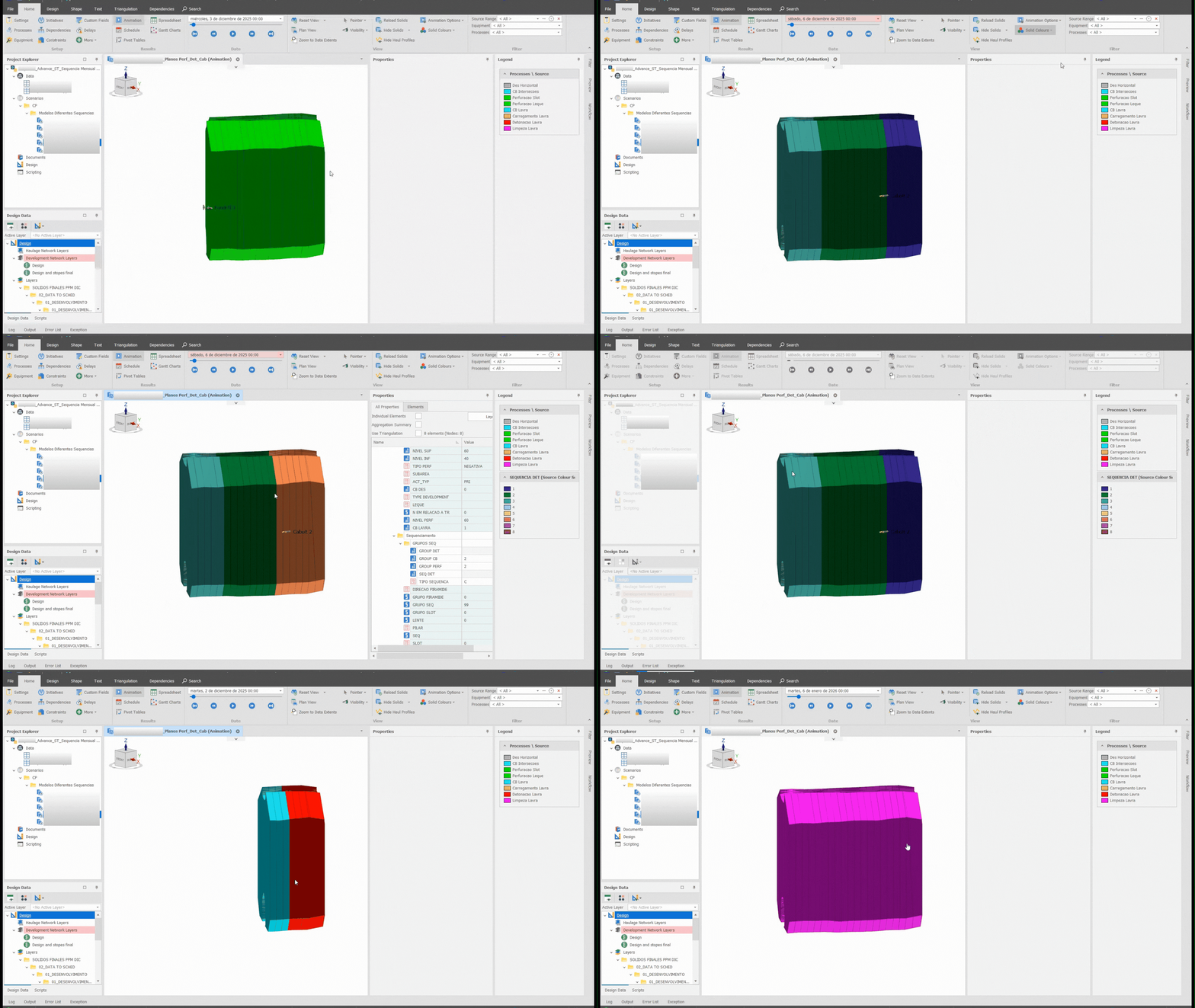
Figure 1. Sequence A involves drilling and cable bolting the full stope length before production begins.
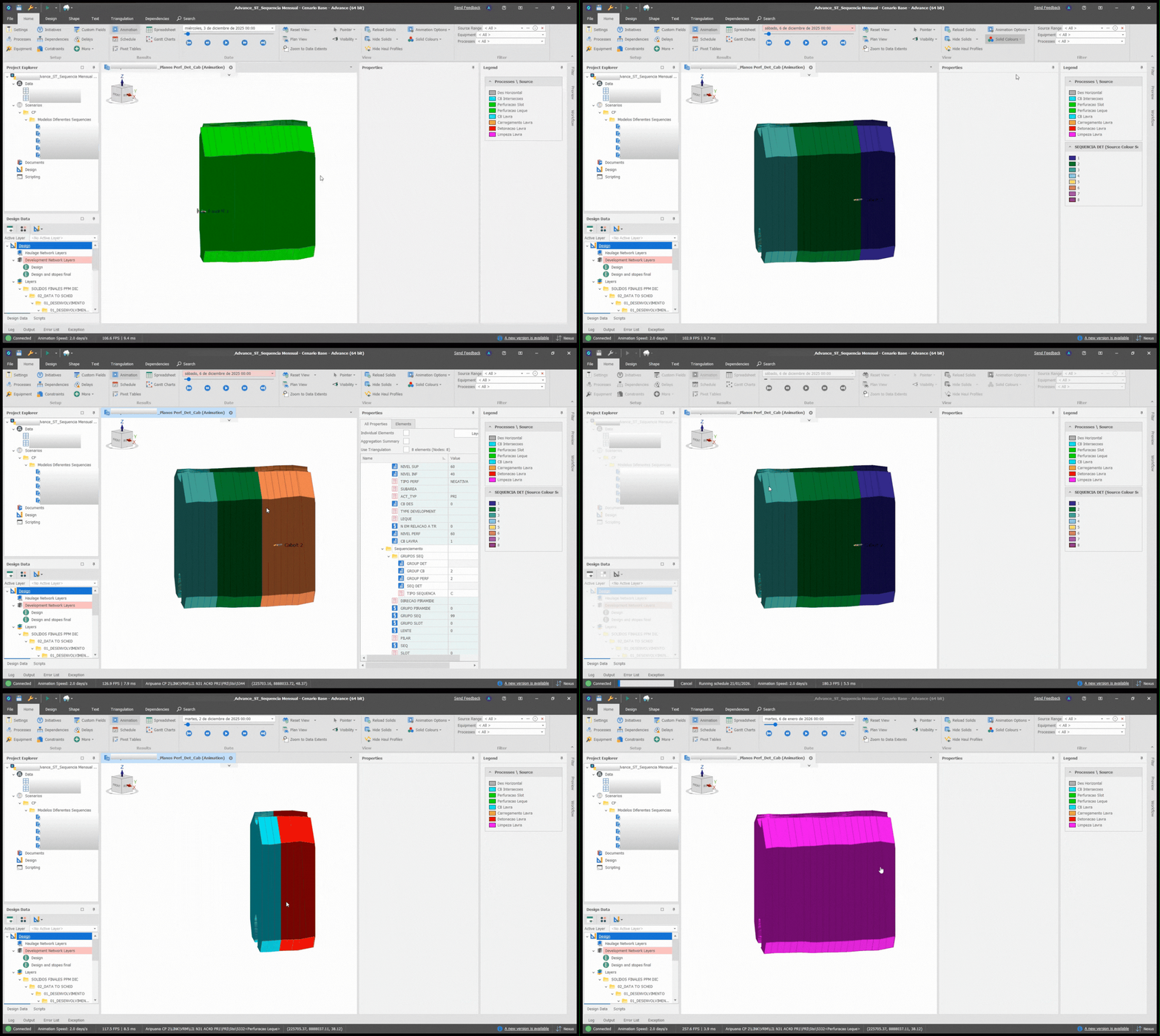
Figure 2. Sequence B involves initially drilling and cable bolting the portion of the stope required to commence production.
The modelling allows the timing of the two sequences and their production outcomes to be compared (Figure 3).
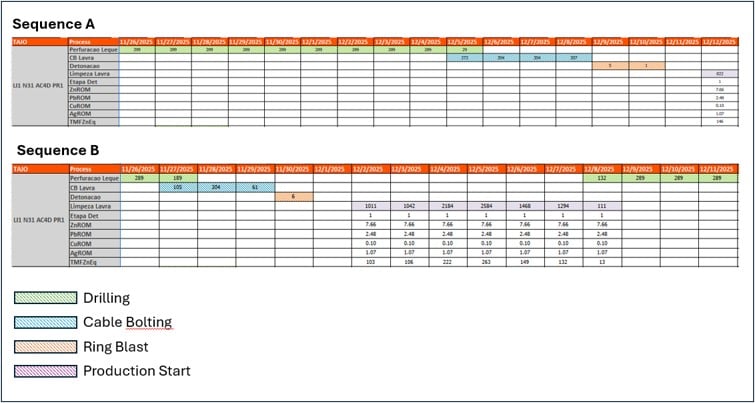
Figure 3. Comparison of Sequence A and Sequence B scheduling and production timing.
In the scenario comparison, Sequence B brought production ore online earlier, maintained a steadier flow of production ore and provided an alternative if one source was unavailable. The results can be viewed in an Excel-like reporting environment linked to the schedule, allowing the outputs from subsequent schedule runs to be reflected in the reporting view.
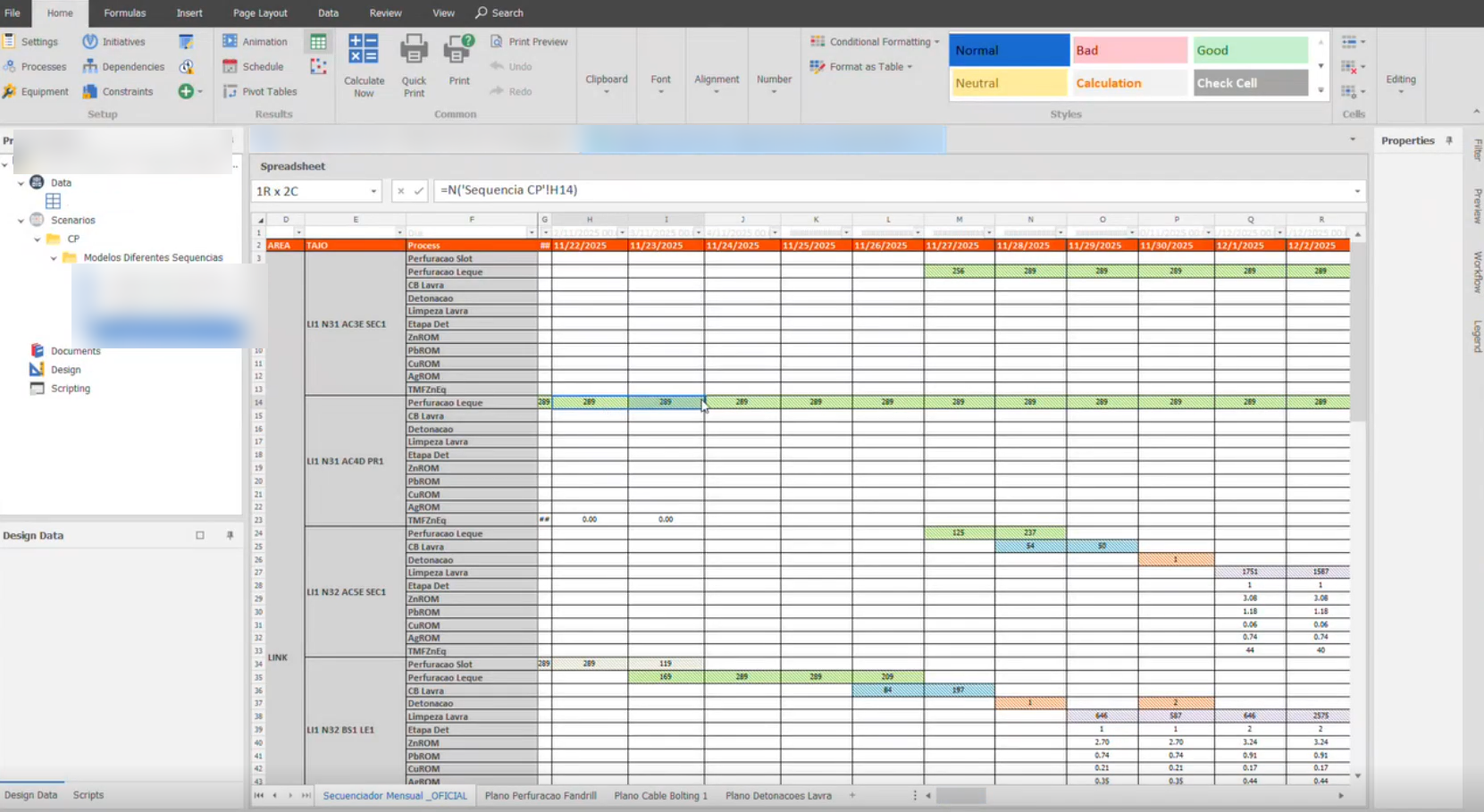
Figure 4. Schedule scenarios can be reviewed in an Excel-like reporting environment linked directly to the schedule.
Replicating dynamic operating conditions
Engineers can assess the potential impact of each production strategy on key resources such as drill and cable bolt inventories, equipment availability and movement, as well as production over time. The workflow also supports the inclusion or exclusion of mining processes as operating conditions change, such as an additional ground support cycle or paste fill mining.
This approach provides planners with a mechanism for evaluating alternative production strategies within the same integrated planning framework. Rather than manually rebuilding schedules, adjusting dependencies or maintaining separate spreadsheet models, scenario changes can be assessed through controlled updates to sequence logic, constraints and process definitions. Combining schedule generation and linked reporting can make the production, resource and scheduling implications of each scenario more visible while maintaining alignment with weekly and monthly planning objectives.
Comparing multiple production options using consistent constraints and resource assumptions can also make schedule trade-offs more visible and help planners assess schedule risk before selecting an operational response.
Supporting iterative planning
Underground mine planning is not only about producing a schedule. It is about keeping that schedule useful as conditions change.
The case study shows how constraint-based scenario evaluation can support this process by allowing engineers to test alternative production strategies within the same scheduling framework, using consistent assumptions about resources, dependencies and operating rules.
The value is not in predicting the exact outcome, but in making trade-offs visible before decisions are made.
References
Åstrand M, Johansson M and Greberg J, 2018. ‘Underground mine scheduling modelled as a flow shop: a review of relevant work and future challenges’, Journal of the Southern African Institute of Mining and Metallurgy, vol 118, no 12, pp 1265-1276.
Campeau L-P and Gamache M, 2020. ‘Optimization of short-term planning in underground mines’, Computers & Operations Research, 155:104642.
Cao J, Han B, Xiang Z, Fang Y, Zou K, Ding H and Liu X, 2026. ‘An efficient selection and evaluation hyper-heuristic for stochastic underground mine production scheduling’, Mathematics, 14:2229.
Fowke S and Groeneveld B, 2018. ‘Overview of mine scheduling for Oyu Tolgoi Underground Project’, in Y Potvin and J Jakubec (eds), Caving 2018, Australian Centre for Geomechanics, Perth.