
Navigating scale effects in engineered cover design for mine waste
From laboratory testing to decade-long field trials, understanding scale effects is essential for designing engineered covers that can perform reliably over the long term.
Contemporary mine closure aims to create landforms that are safe, stable and do not cause environmental harm. Central to achieving these objectives are engineered cover systems, which provide a stable interface between mineralised waste, such as tailings, and the surrounding environment. By limiting water infiltration and subsequent percolation, these covers help reduce the risk of acid and metalliferous drainage.
In semi-arid regions such as north-west Queensland, where evaporation significantly exceeds rainfall, the store-and-release cover has become an industry standard. These systems use a thick, loose layer of rock and soil to store rainfall, which is then removed through evapotranspiration during dry periods. However, a key challenge in mine closure is predicting how these covers will perform over the long term.
Reliable cover design requires a clear understanding of scale effects across laboratory, intermediate and field-scale investigations. Results observed at one scale do not always translate directly to another, making it important to understand the strengths and limitations of each stage of testing.
The limitations of laboratory-scale characterisation
Accurate characterisation of hydraulic properties, particularly soil water characteristic curves, forms the foundation of cover design. However, relying solely on laboratory data can introduce non-conservative risks into performance predictions.
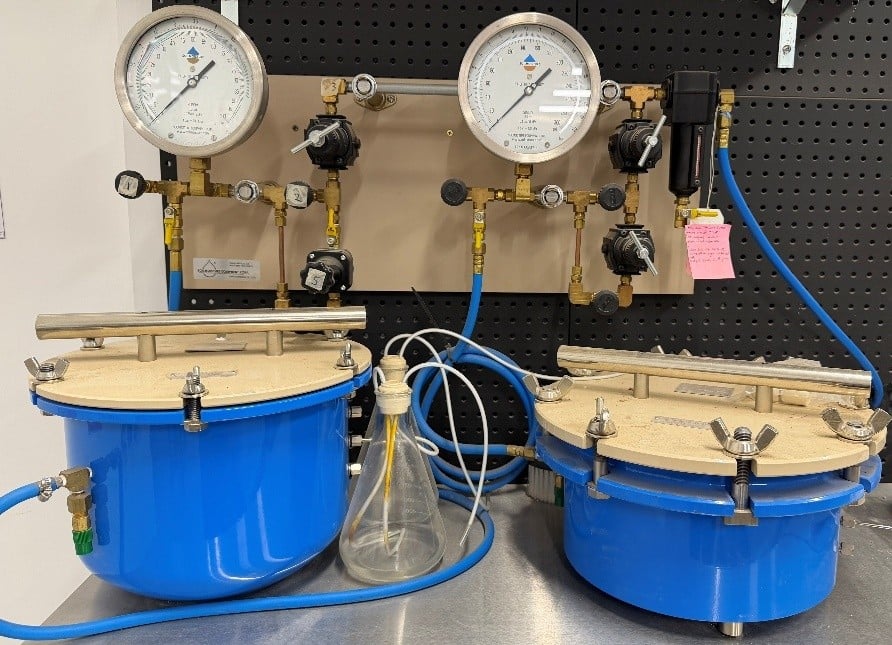
Laboratory testing using pressure plate extractors typically requires coarse materials to be removed so samples can fit within the testing apparatus. This process alters the natural pore structure of the material. Reconstituted laboratory samples also fail to capture the complex in situ structure, stress history and weak cementation present in field materials.
Because coarse gravels are removed, laboratory samples often pack more densely than they would in the field. This can artificially increase the air-entry value and overestimate water-holding capacity. In addition, standard testing often focuses only on drying behaviour and may not account for hysteresis, the difference between wetting and drying responses, which can be critical to cover performance.
Bridging the gap with intermediate column trials
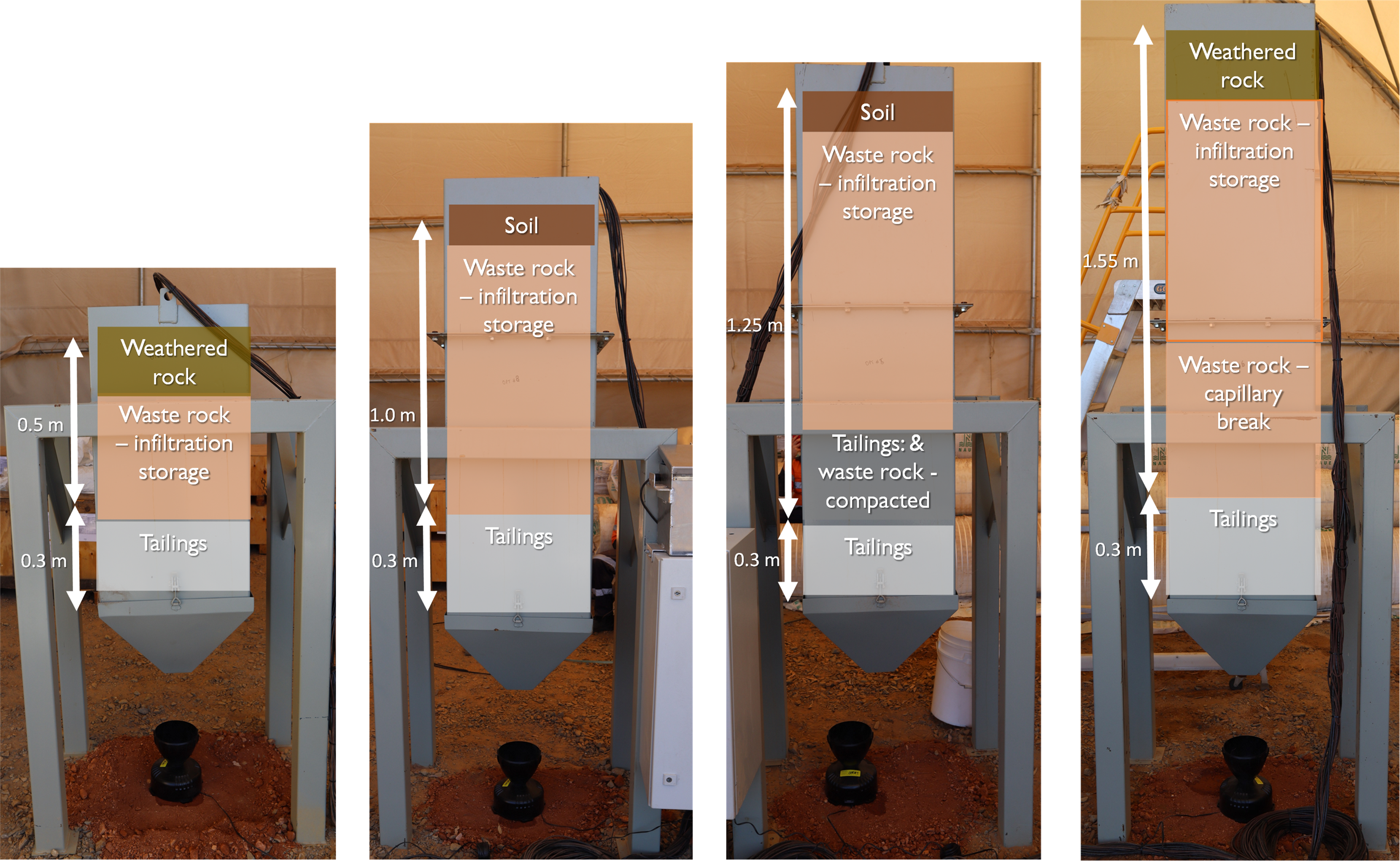
Intermediate-scale column trials provide an important transition between laboratory testing and field implementation. These trials allow practitioners to test representative volumes of material using full particle size distributions, including coarse-grained capillary breaks that may be difficult to assess in laboratory testing.
Column trials also allow continuous monitoring under controlled cyclic climate conditions, helping to capture hydraulic processes such as hysteresis that may not be adequately represented in laboratory studies. Researchers can vary rainfall frequency and intensity to rapidly evaluate potential water balance scenarios and compare alternative cover designs.
While these advantages make column trials highly valuable for design development and model validation, they cannot fully reproduce the atmospheric variability that influences evaporation under real site conditions. Nor can they replicate the long-term climatic cycles experienced by operational mine sites.
The unmatched value of large-scale field trials
The most robust validation of cover performance comes from large-scale field trials, which incorporate actual site conditions, construction methods and climatic influences.
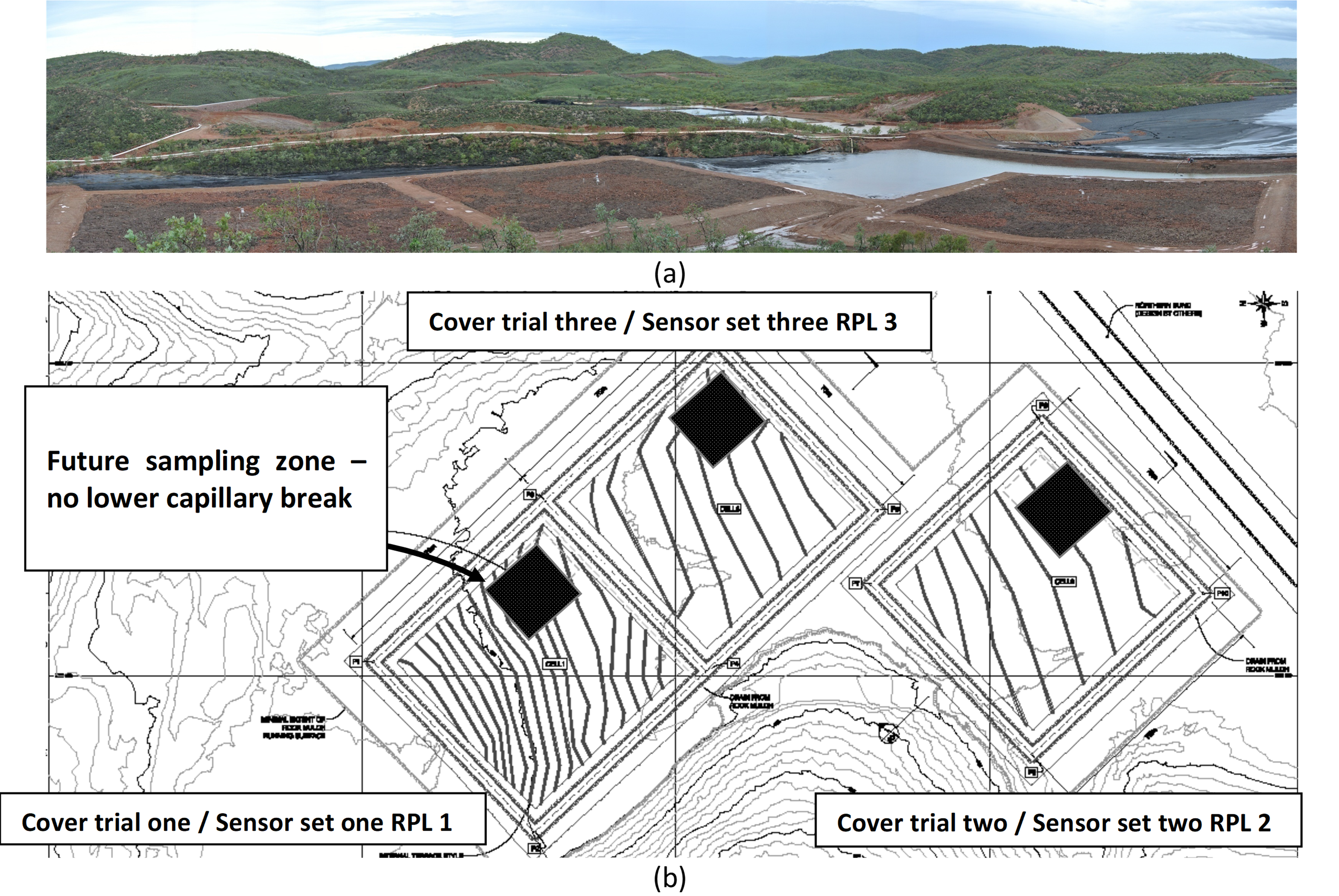
A decade-long field trial at Century Mine in north-west Queensland demonstrates the insights that can be gained from full-scale testing. Constructed directly on a tailings storage facility, the trial exposed cover systems to variable weather conditions, including intense wet seasons and prolonged winter dry periods.
The use of commercial-scale construction equipment also introduced real-world imperfections, such as preferential infiltration pathways, that are absent in hand-prepared laboratory and column samples. Long-term monitoring showed sustained performance, with cumulative net percolation restricted to 5-9 mm per year over a ten-year period.
Despite their value, field trials require significant investments of time, cost and land area. They may also take years to reveal long-term failure mechanisms, such as vegetation die-off, termite intrusion or failure of a capillary break layer.
An integrated approach to design
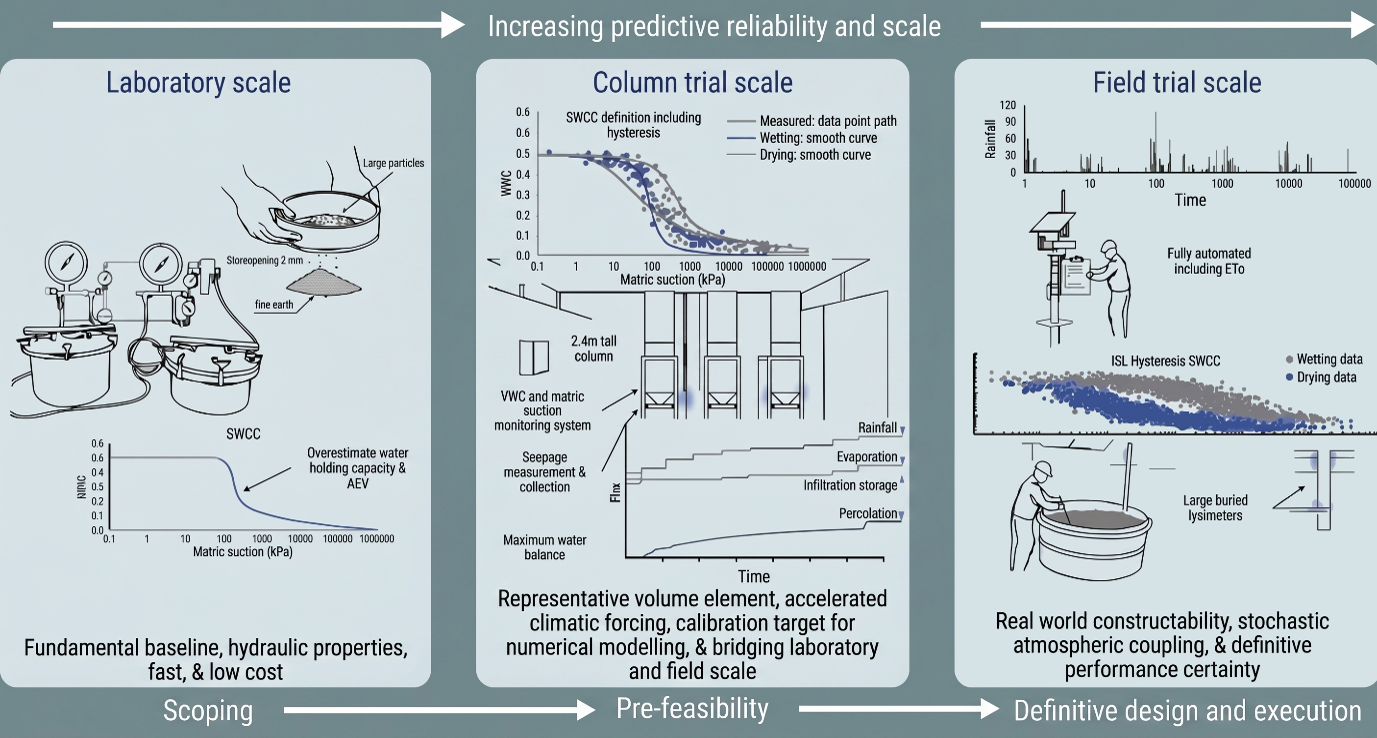
No single scale of investigation can provide all the information required for robust cover design.
Laboratory testing provides essential hydraulic baseline data, but its limitations must be recognised. Column trials help bridge the gap by testing representative materials under controlled dynamic conditions, while large-scale field trials provide the strongest evidence of long-term performance under real operating conditions.
By integrating data and insights from all three scales, resource professionals can improve confidence in cover performance predictions and develop more resilient closure solutions. A multi-scale testing framework provides a practical pathway for designing engineered covers capable of achieving long-term rehabilitation objectives.
References
Defferrard, P, Rohde, T and Lang, J 2024, 'Ten years of cover performance data and capillary break investigation for leading practice store and release cover at Century Mine', in AB Fourie, M Tibbett and G Boggs (eds), Mine Closure 2024: Proceedings of the 17th International Conference on Mine Closure, Australian Centre for Geomechanics, Perth, pp. 681-694.
Rohde, T, Vogler, H, Lang, J, Crosbie, J and Pandelis, A 2024, 'Three years of barrier cover field trials at Rosebery mine', in AB Fourie, M Tibbett and G Boggs (eds), Mine Closure 2024: Proceedings of the 17th International Conference on Mine Closure, Australian Centre for Geomechanics, Perth, pp. 627-642.
Williams, DJ and Rohde, TK 2009, 'Reliability of using laboratory-determined soil water characteristic data for mine waste cover design', in AB Fourie and M Tibbett (eds), Mine Closure 2009: Proceedings of the Fourth International Conference on Mine Closure, Australian Centre for Geomechanics, Perth, pp. 493-504.