
Fast Five with Arja Jewbali: Turning resource uncertainty into better business decisions
How well does your organisation understand and manage resource uncertainty, and more importantly, how effectively is that uncertainty incorporated into decision-making?
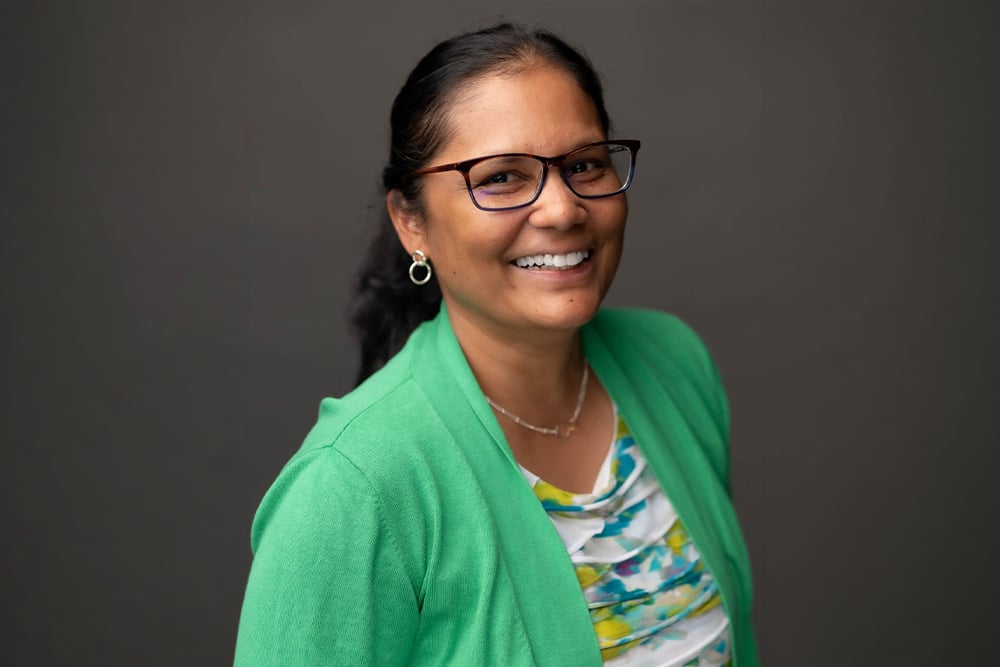
Ahead of her presentation at Strategic Mine Planning 2026, Arja Jewbali, Head of Resource Management, Global at Newmont, shares her insights on the evolving role of resource modelling in mine planning.
Drawing on experience across multiple commodities and a global portfolio of assets, Arja discusses the growing importance of quantifying resource risk, the opportunities presented by machine learning and AI, and why the mining industry must move beyond treating uncertainty as a purely technical challenge. Read our Fast Five interview to discover why this conversation is critical to the future of mine planning.
1. What first sparked your interest in resource modelling and uncertainty, and how did that path lead you to your current role?
As part of my undergraduate studies, I took a geostatistics course and quickly realized it was something I had a natural affinity for. I was drawn to the analytical side of resource estimation. That interest became a career-long passion and led me through a range of technical and leadership roles across the industry.
2. After working across gold, base metals, iron ore and now a global portfolio of assets, what have you learned about the relationship between resource uncertainty and business decision-making?
One of the biggest lessons I've learned is that the industry still struggles to fully connect resource uncertainty with business risk. Most organizations are very comfortable talking about financial risk, market risk, or operational risk, but resource risk often doesn't receive the same attention, despite being a fundamental driver of business outcomes.
The resource model underpins billions of dollars of decisions. Yet uncertainty is frequently treated as a technical issue rather than a business issue.
3. Quantifying uncertainty has long been a passion of yours. What are some of the most exciting advances in geostatistical techniques that are changing how mining companies understand and manage risk?
I'm particularly excited by the potential of machine learning and advanced analytics to complement traditional geostatistical methods.
These approaches can help us identify complex, non-linear relationships within large datasets and potentially improve our ability to understand and quantify uncertainty. The opportunity isn't replacing geostatistics with machine learning. It's combining the strengths of both to better understand risk and ultimately make better decisions.
4. As mining operations become increasingly data-rich, how do you see technologies such as advanced analytics, machine learning and AI influencing the future of resource modelling?
The future is less about generating more data and more about connecting data in meaningful ways.
AI and machine learning have the potential to link information that traditionally sits in separate systems, whether that's drilling, geological interpretation, production, reconciliation, or operational performance. They can help uncover non-linear relationships, support faster model updates, and create tighter feedback loops between what we predict and what actually happens in the mine.
Ultimately, I see a future where resource models are updated more dynamically and where learning from operational outcomes (reconciliation loop) becomes a routine part of the modelling process.
5. Why is your session important for the future of mine planning, and why should delegates make sure they're in the room?
I really would like to have a conversation about where mining companies are on their journey from understanding resource uncertainty to actually using it in decision-making.
For years, we've had the technical tools to quantify uncertainty, and there are plenty of well-documented case studies that demonstrate the value. The bigger question is whether the industry has truly operationalized uncertainty and integrated it into planning processes.
Most importantly, I don't want this to be a one-way presentation. I'm hoping delegates will share their own experiences, challenges, successes, and lessons learned. The industry is at very different stages of this journey, and I think we'll all learn more by having an open conversation about what's working, what's not, and what the next steps should be.