
AusIMM Technology Forum: Turning innovation into operational impact

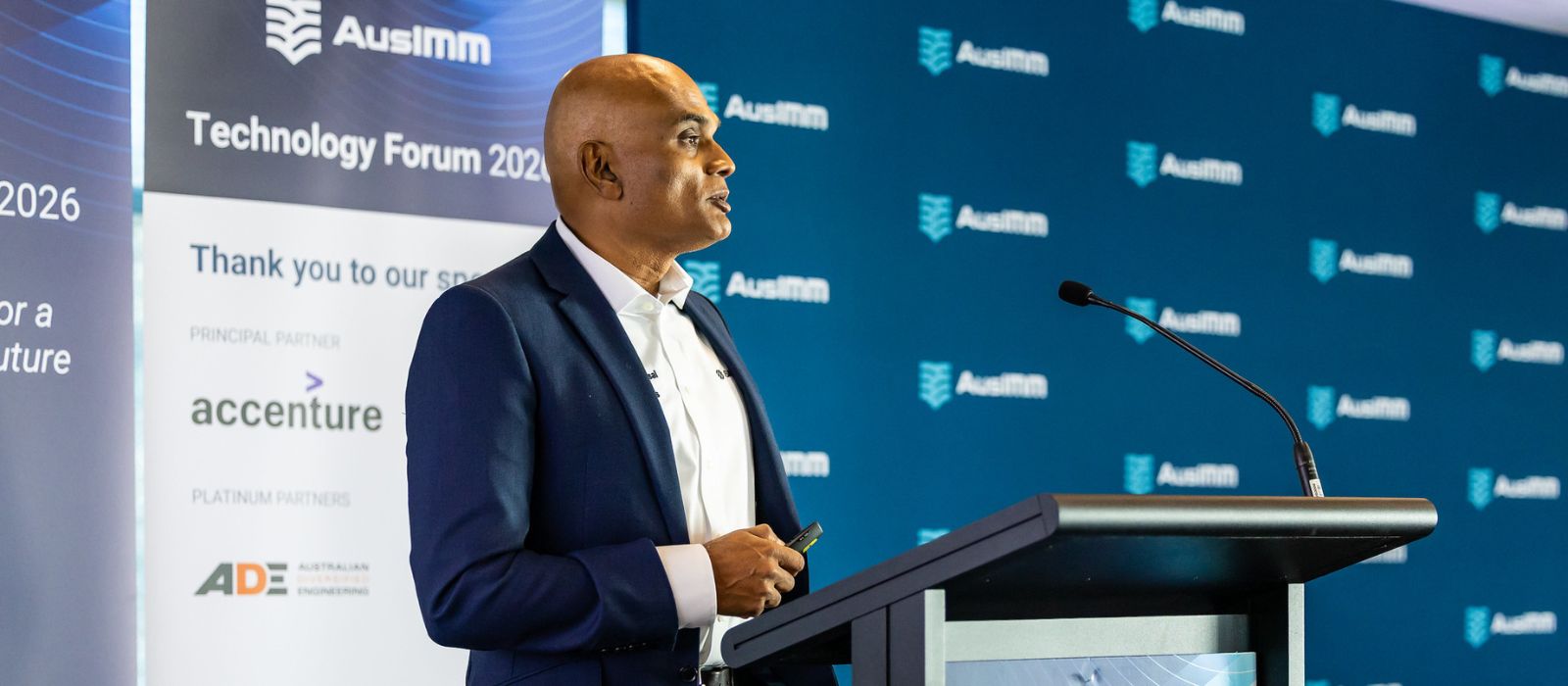
AusIMM recently held its first Brisbane Technology Forum for 2026, bringing together industry leaders, innovators and practitioners to explore how emerging technologies are being translated into practical operational outcomes across the mining sector.
Delivered in partnership with AECOM at its Fortitude Valley office, the forum highlighted real-world solutions that are improving safety, efficiency and sustainability across mining operations.
Across keynote and case study presentations, a consistent message emerged: the future of mining will be shaped not by a single breakthrough, but by the integration of technologies that deliver measurable operational outcomes.
Five key takeaways for industry
- Artificial intelligence is shifting from experimentation to enterprise-wide financial strategy
- Safety improvements are increasingly being driven by removing personnel from high-risk environments
- Automation is becoming more accessible through modular, scalable deployment approaches
- Electrification is progressing beyond compliance to deliver operational efficiencies
- Real-time operational visibility is unlocking measurable gains in productivity and asset utilisation.
Read our summary of keynote presentations below.
Keynote: Generative AI for mining and resources – the playbook for predictive, efficient, high‑ROI operations
Shayne Phillips, Global Client Executive, Dell Technologies
A central theme of the keynote was the need to reframe artificial intelligence as a financial and operational strategy rather than a technology initiative.
The presentation emphasised that platform-level decisions in AI directly influence return on investment, with organisations that industrialise AI through structured approaches seeing significantly greater value than those running fragmented pilot programs.
A key concept introduced was the establishment of a cross-functional AI Centre of Excellence aligned to core operational drivers, including safety, maintenance, production and business performance. By linking AI initiatives directly to these areas, organisations can better connect technology investment to measurable outcomes such as reduced incidents, improved equipment availability and increased throughput.
The “ROI flywheel” framework provided a practical model for scaling AI adoption. By prioritising early wins, measuring outcomes and reinvesting value into further capability development, organisations can build momentum while strengthening data foundations and governance over time.
You can watch Shayne present further on this topic in the video below.
Next-generation haul road performance: safety, cost and environmental gains
Matthew Gray, Engineering Manager, Australian Diversified Engineering
Haul roads remain a critical factor in both safety and operational efficiency. The presentation highlighted how dust management continues to present risks across visibility, health, equipment wear and regulatory compliance.
Importantly, overwatering was identified as a less recognised risk, reducing traction and increasing the likelihood of incidents. Achieving the right balance between dust suppression and safe operating conditions requires more precise monitoring and control.
Emerging technologies, including GPS-controlled spray systems and real-time condition monitoring, are enabling water carts to operate as precision tools rather than reactive systems. These approaches allow operators to optimise water use while improving safety outcomes and extending asset life.
For more information on this topic, read this month’s Bulletin article from Australian Diversified Engineering: Measuring friction on haul roads: reducing risk and unlocking operational savings
Scaling automation without the Big Bang: a maturity ladder for zero entry
Dush Wimal, Director, Universal Field Robots
With 11 fatalities in Australian mining in 2024 and no meaningful improvement over a decade, the message is clear: traditional safety systems are not enough. The core insight is that some risks, such as seismic events and mud rushes, cannot be managed or trained away. The only way to eliminate them is to remove people from exposure.
The concept of ‘zero entry’ was presented as a system-wide approach enabled by interoperable and OEM-agnostic platforms. This allows mixed fleets to be integrated into a single control environment, addressing a major barrier to automation adoption.
Rather than requiring large-scale transformation, a staged maturity approach was outlined, enabling organisations to move progressively from tele-remote operation to full autonomy. This incremental pathway allows value to be delivered at each stage while reducing implementation risk.
From concept to pit: real-world deployment of electric mobile process units in Australia
Amos Park – Mechatronics Engineer Global, Dyno Nobel
The transition to electrification within mining is expanding beyond mobile fleets and into specialised operational equipment, including blasting systems.
Electric Mobile Process Units (MPUs) were presented as a practical step toward reducing emissions in blasting operations. However, implementing this technology required overcoming complex challenges, including power availability, system durability and charging logistics in remote environments.
By leveraging existing electric vehicle platforms and adapting them to meet operational requirements, development risk was reduced and deployment timelines accelerated.
Field trials confirmed that electric MPUs can operate effectively within existing workflows, with charging integrated into reload cycles. Additional efficiency gains were identified through regenerative braking, further strengthening the business case for adoption.
Unlocking value with short interval control: strategy, execution and frontline impact
Chris Sutton, Global Solutions Advisor – Underground; and Darryn Fisher, Senior Vice President – Underground; MST Global
Short Interval Control (SIC) addresses a critical gap between planning and execution by enabling real-time visibility and decision-making during shifts.
The presentation highlighted how operational losses often result from small, compounding inefficiencies, such as delays, deviations from plan and poor coordination across teams.
By providing structured monitoring of plan versus actual performance, SIC enables immediate intervention, allowing issues to be addressed before they escalate.
The benefits extend beyond productivity improvements, with increased predictability, better asset utilisation and reductions in fuel consumption, emissions and equipment wear. This reinforces the link between operational discipline and broader sustainability outcomes.
Summary
Across the forum, a clear shift was evident: the industry is moving from exploring new technologies to embedding them into everyday operations.
For organisations, the key opportunity lies in moving beyond pilot programs and toward structured, scalable implementation. Those able to integrate these technologies effectively will be best positioned to deliver sustained operational value and meet the evolving expectations of the industry.
Acknowledgements
AusIMM would like to thank speakers – Shayne Phillips, Matthew Gray, Chris Sutton, Darryn Fisher, Amos Park, Dush Wimal – and also our partners: AECOM, Dell Technologies, Dyno Nobel, MST Global, Australian Diversified Engineering and Universal Field Robots for contributing to the success of the first Brisbane Technology Forum in 2026.
AusIMM's next Technology Forum will be held in Perth on 22 July 2026, continuing the conversation on innovation and its role in shaping the future of mining. To register your interest in attending the Perth Technology Forum, please register here.