
Cutting coal losses: condition monitoring delivers real-time hydrocyclone optimisation
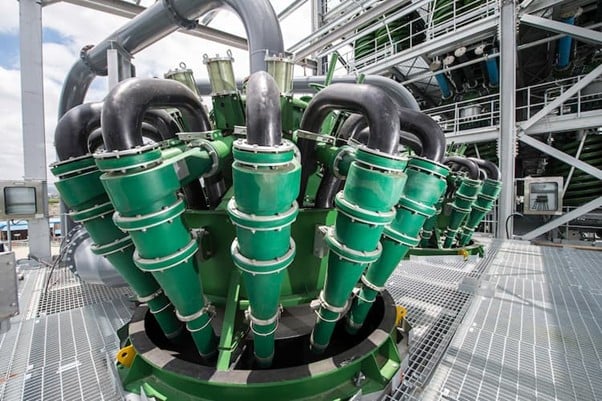
Roping remains one of the most persistent challenges in hydrocyclone performance, leading to misplacement of fine coal and circuit inefficiencies.
Integrating advanced vibration-based condition monitoring, with its proven hydrocyclone designs, is enabling operators to detect and correct roping events in real time - a step forward in process control and optimisation.
Hydrocyclones: critical for coal preparation
Hydrocyclones are at the heart of coal preparation, playing a critical role in desliming, classifying and dewatering fine coal. Multotec’s team of professionals have significant expertise in cyclone design and operation, helping deliver improved separation efficiency and reduced coal losses. Yet, as plant conditions vary, even the best-engineered hydrocyclones face challenges, with roping being one of the most common.
Roping occurs when excessive solids collapse the air core inside the cyclone, turning it into a simple pipe. This leads to valuable coal misplaced to tailings, instability across the circuit and significant losses before operators may even notice. Traditionally, detection relies on manual inspection, often well after efficiency has been compromised.
Turning insight into performance
Our approach is to continuously look for ways to give operators more control over what happens on site. By integrating advanced monitoring tools with hydrocyclone technology, we can identify roping in real time, allowing plant operators to act quickly and protect coal recovery.
One such tool is the Sensoteq® vibration monitoring system, originally developed for rotating equipment. When installed on hydrocyclones in a Hunter Valley coal preparation plant, it revealed that each cyclone has a unique vibration signature. By setting alarm thresholds, operators could be alerted immediately when vibration patterns indicated roping, long before visual inspection would have detected it.
Delivering measurable benefits
The Hunter Valley trial confirmed what our engineers know well: cyclone performance varies between units in a cluster. With real-time monitoring, operators gained:
- Improved separation efficiency through rapid roping detection and intervention.
- Reduced coal losses by preventing misplacement to tailings.
- Enhanced circuit stability by optimising cyclone clusters based on individual unit behaviour.
- Proactive maintenance insights, as vibration data revealed which cyclones were more prone to issues over time.
By applying these insights, operators can move from reactive troubleshooting to proactive optimisation, maximising the value of every tonne of coal processed.
Conclusion
Multotec’s hydrocyclones have long been trusted in coal preparation plants worldwide. By combining this technology with advanced condition monitoring, operators benefit from greater visibility, faster response to challenges, and reduced operating costs. Our expertise ensures that monitoring data is translated into actionable improvements — enabling more efficient, stable, and cost-effective plant performance.