
Heap leaching’s quiet comeback: Why Australia is re-embracing a proven, predictable pathway
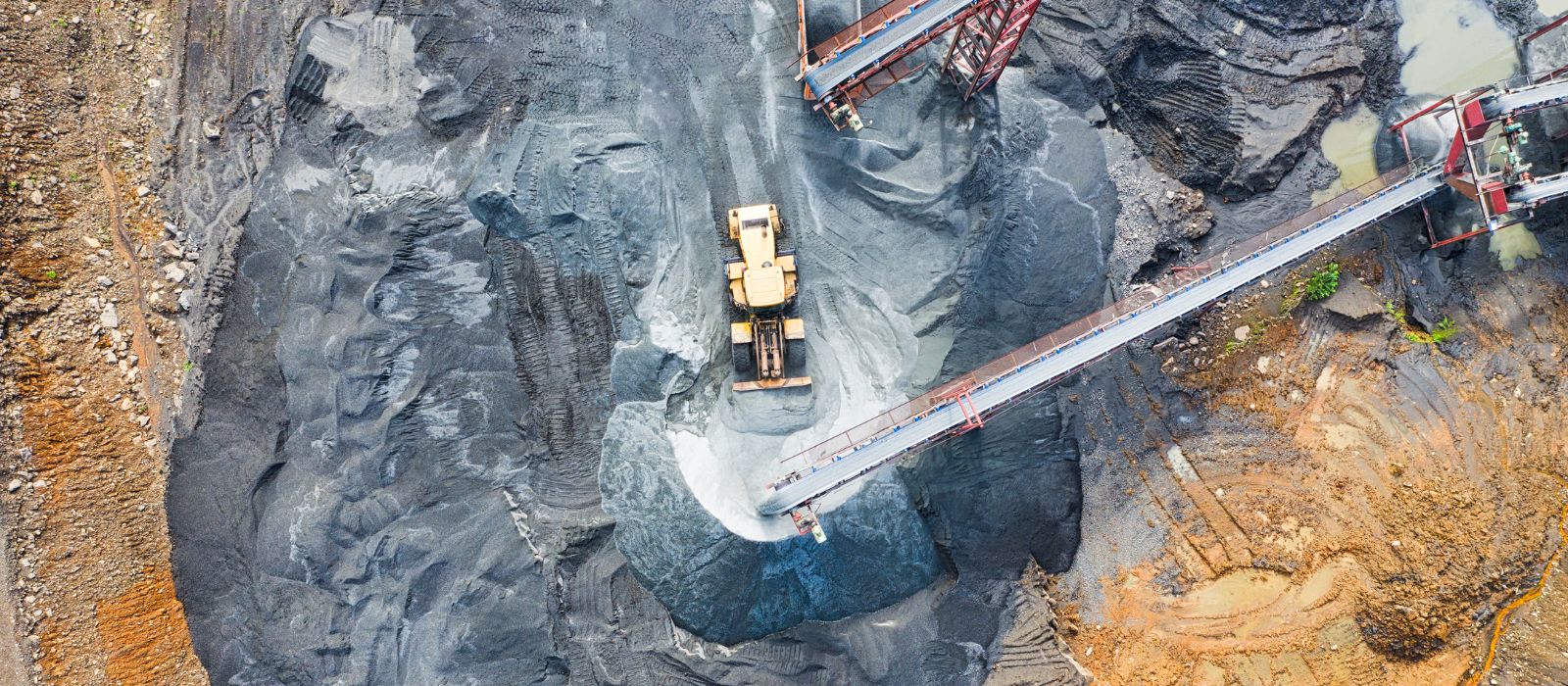
For much of the past two decades, heap leaching has sat on the fringes of Australian mine development – remembered, respected, but rarely prioritised.
In Western Australia in particular, it became something of a legacy technique – effective in its day, but overshadowed by conventional circuits as grades rose, capital flowed, and processing plants became increasingly modular.
That perception is now shifting.
Heap leaching is quietly re-entering the development conversation in Australia, not as a novelty or a cost-cutting shortcut, but as a disciplined, increasingly predictable option for specific project types. The renewed interest is being driven less by technological breakthroughs than by a convergence of economics, operating experience and jurisdictional fit – coupled with a far greater ability to make early, defensible decisions about whether a heap leach will work, or should be abandoned.
According to SRK Consulting’s Principal Civil Engineer Heather Thomson and Associate Principal Metallurgist Aaron Debono FAusIMM, the real story behind heap leaching’s comeback is not hype, but maturity.
From pause to progress
Heap leaching first gained traction in Australia in the 1980s alongside the rise of open pit oxide gold mining. Early operations were relatively simple by today’s standards, and while some delivered strong results, others struggled with recoveries, seepage losses and limited metallurgical understanding.
“The early projects taught the industry a lot,” Heather says. “They highlighted how critical characterisation, testwork, drainage, foundations and stacking methods really are. Many of the fundamentals we rely on today came directly from those early lessons.”
The 1990s saw technical advances and expansion into copper oxides, including projects such as Nifty in Western Australia. That period helped establish confidence that heap leaching could be applied beyond gold and executed effectively in Australian conditions.
But as the industry moved into the 2000s, heap leaching gradually fell out of favour domestically. Commodity price cycles played a role, as did a shift towards higher-grade deposits and conventional processing routes. Smaller, short-life projects increasingly favoured relocatable plants that could be commissioned quickly and moved on just as fast.
“Establishing and then decommissioning a heap takes time,” Aaron explains. “When projects were only carrying 3 to 5 years of mine life, that didn’t always align with development strategies at the time.”
Crucially, heap leaching did not disappear globally. While Australia pivoted, the technique continued to evolve in Nevada, Latin America, Africa, China and Central Asia – often at significant scale.
Learning offshore, applying locally
One of the strongest themes to emerge from Heather and Aaron is that today’s heap leach projects benefit from decades of offshore operating experience.
“There’s a tendency to think we’re dealing with new problems,” Heather says. “In reality, many of the challenges are familiar – but the tools to manage them have improved dramatically.”
Advances in geosynthetics, liner systems, drainage infrastructure, agglomeration methods and operational monitoring have reshaped what is achievable. Larger and higher stacks are now routinely constructed overseas, supported by better understanding of material behaviour and long-term performance.
Aaron points to agglomeration as a particularly important area of progress. “A lot of the know-how around dealing with clays, binders and permeability has come from overseas operations,” he says. “The old practices don’t always apply, especially when you move away from simple oxide ores.”
Just as important is the evolution of monitoring. Modern heap leach operations increasingly track where material is placed on a heap and how it performs over time. That not only improves recovery management but allows targeted reprocessing decisions years later.
Australia, Aaron argues, is now well positioned to import that operating experience – without having to repeat the mistakes that shaped it.
Why Western Australia fits the bill
Western Australia’s renewed interest in heap leaching is not accidental. Heather is clear that the state’s physical characteristics make it unusually well suited to the method.
“Low seismicity is a huge advantage,” she says. “It simplifies long-term stability and reduces the likelihood of the kind of failure modes you see elsewhere. Broad, relatively flat terrain makes siting easier, and our climate is generally consistent and predictable.”
Those conditions translate directly into more stable heaps, more reliable drainage patterns and more predictable leach behaviour. From a metallurgical and economic perspective, that predictability matters.
“If you’ve done the testwork properly and the heap is built to design, you can be confident it will perform as expected,” Aaron says. “Movement changes drainage, and once that happens, recoveries can fall off dramatically.”
WA also benefits from a mature regulatory environment and a deep pool of technical expertise. Both Heather and Aaron emphasise the importance of clarity – not leniency – in approvals processes.
“A defined framework helps proponents understand what’s required so they can design accordingly,” Aaron says.
The real shift: decision quality
While gold prices and ESG considerations are clearly part of the picture, the most significant change underpinning heap leaching’s return may be the industry’s ability to make early, informed decisions.
Western Australia is home to some of the world’s leading metallurgical laboratories and testing facilities, with the capacity to run large numbers of column tests in parallel and rapidly assess ore variability, agglomeration options and reagent selection.
“Early evaluation is critical,” Aaron says. “You can run a lot of tests in a relatively short time, rather than waiting months for a handful of results. That allows you to rule heap leaching in – or out – early in the study process.”
Improved mineralogical analysis further reduces uncertainty, enabling proponents to understand how different ore types will behave across a mine schedule.
That shift changes the risk profile entirely. Heap leaching is no longer a leap of faith undertaken late in a study – it is a pathway that can be systematically de-risked at concept or early pre-feasibility study stage.
Low capex – with caveats
Heap leaching is often marketed as a low capex, fast-to-build solution. Both Heather and Aaron caution that this narrative can be oversold.
“Low capex is relative,” Aaron says. “Heaps still require significant earthworks, liner systems, ponds and infrastructure. Ramp-up times are often underestimated, particularly compared with conventional plants.”
Heather adds that closure costs are frequently under-appreciated. “There are heaps around Australia that were never properly closed,” she says.
“Closure might sit decades out in a net present value calculation, but it influences the entire design.”
Where heap leaching does offer a genuine strategic advantage is modularity. Starter heaps can be constructed and expanded in stages, allowing proponents to optimise early cash flow and scale development based on real operating data.
“That optionality is powerful,” Heather says. “You’re not committing to a full build on day one.”
Beyond gold
Gold remains the dominant commodity driving heap leach interest in WA, but Aaron notes growing attention from rare earth element developers – particularly those dealing with low-grade, clay-hosted deposits.
“In some cases, conventional stirred leach circuits are simply not viable,” he says. “You’re talking about very low solids, long residence times and massive capital requirements. Heap leaching starts to look like the only pathway that stacks up.”
Reprocessing of historical heaps and low-grade stockpiles is also back on the agenda, supported by better data, better monitoring and improved economics.
Heather adds that the ESG dimension cannot be ignored. “There’s also the opportunity to remediate legacy stockpiles and reduce long-term liabilities,” she says.
A mainstream tool – selectively applied
Neither Heather nor Aaron see heap leaching replacing conventional processing. Instead, they describe a future where it sits alongside traditional circuits as a targeted, well-understood option. “It will become more mainstream, but only where it makes sense,” Heather says.
As the next wave of Australian heap leach projects moves from concept to reality, both point to confidence as the critical factor – confidence from regulators, financiers, communities and operators alike.
“Proven, solid practice builds confidence,” Heather says. “Each successful operation makes the next one easier.”
For WA developers, heap leaching’s comeback is less about rediscovering an old technique than recognising how far the industry has come. In a jurisdiction defined by stability and technical depth, predictability may prove to be the most valuable commodity of all.
About the contributors
Heather Thomson (CPEng MIEAust) is a principal civil engineer in SRK Consulting’s tailings group, based in Perth. She specialises in the design, operation and closure of mine waste facilities, including tailings storage facilities and heap leach pads. With more than 15 years experience, her work integrates geotechnical and water management perspectives to design facilities that remain stable over the long term, manage water effectively and transition to robust post-mining landforms. Heather has extensive experience with Western Australian mine waste facilities, including projects taken from concept through to closure.
Aaron Debono is a metallurgist and project manager with more than 30 years experience across gold, iron ore and multi-commodity operations. He has held operational, supervisory and corporate roles with a range of producers, working across the full project lifecycle from commissioning through to closure. Now operating as an independent consultant to SRK, Aaron brings a strongly operational perspective to project assessment, testwork and development strategy, with a particular focus on early-stage decision-making and economic realism.