Creating space for change: Michelle Radley on leadership, opportunity and building respect in the Pilbara

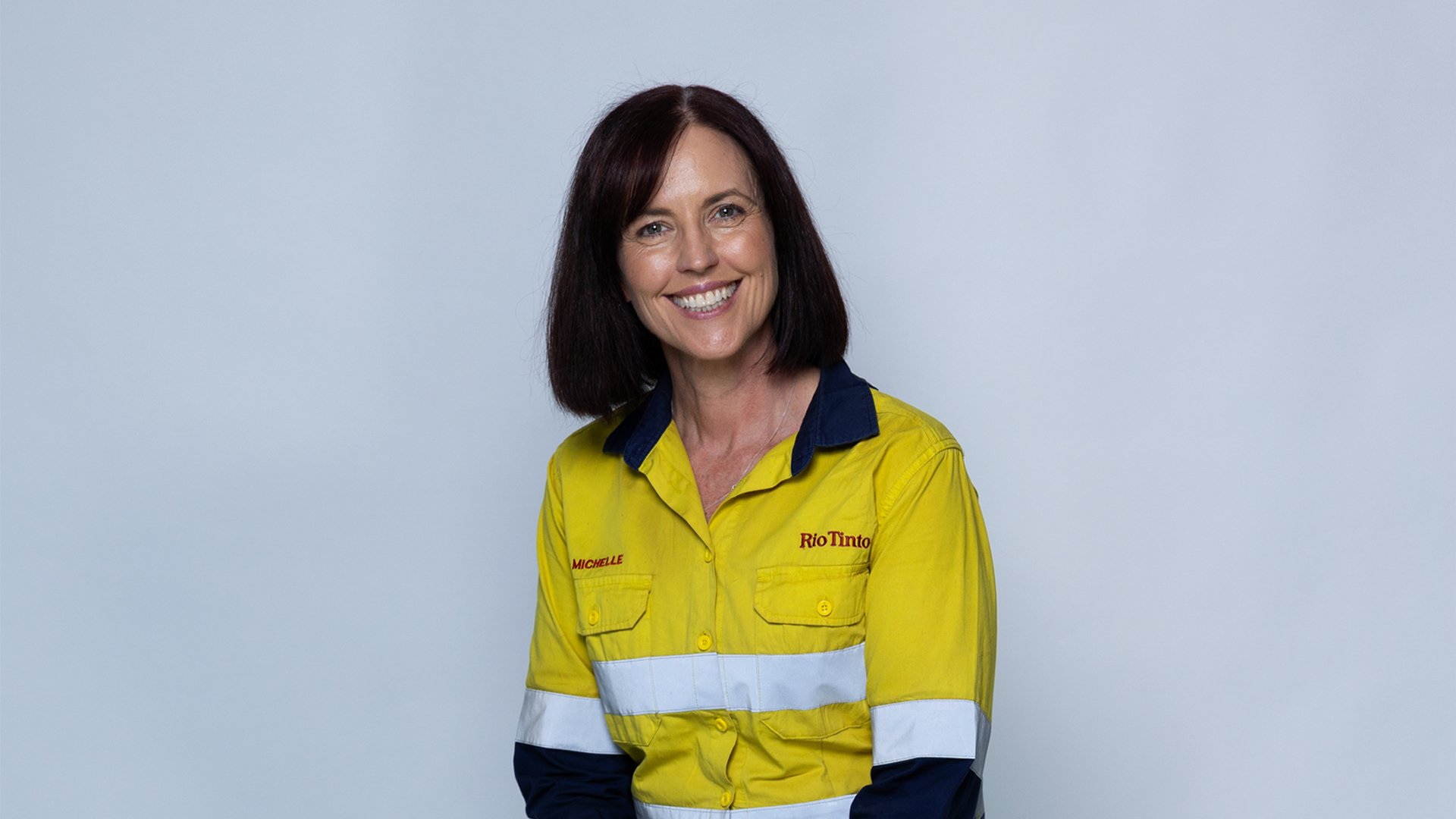
When Michelle Radley reflects on her 18-year career with Rio Tinto, the word she comes back to most often is unexpected. Not because she feels unprepared, or out of place, but because her journey began in accounting and wound its way through people and culture, technology advisory, and major operational roles. It has never followed a straight line. “I’ve taken what I’d call a very squiggly path,” she laughs. “But that’s the point. You don’t have to fit the mould.”
Today, Michelle is the General Manager of Rio Tinto’s Dampier Port, one of its two major port operations in the Pilbara. Her teams oversee everything from train unloading and blending to shipping and marine operations, managing more than 150 million tonnes of iron ore each year. Helicopters, tugs, pilots, complex logistics: “I’ve got all the big toys,” she jokes. “It’s the pointy end of the iron ore business.”
But it’s also a place where leadership matters deeply, not only in how operations are run, but in how people feel, connect, and impact the culture around them.
As we celebrate International Women’s Day (IWD) 2026, Michelle’s story offers a powerful look at what it means to lead with courage, curiosity, and humanity in an environment where opportunity is not always evenly distributed, and where creating space for everyday conversations can spark remarkable change.
A non-traditional path and the power of saying “Yes”
Michelle began her career in an accounting practice, working on tax and audit. “I knew pretty quickly that it wasn’t the career for me,” she says with a smile. But she also recognises the foundation it gave her: discipline, business acumen, and the ability to understand how organisations really work.
When she joined Rio Tinto in 2008 in a joint-venture accounting role, she didn’t imagine she’d one day run a major operational site. “Never,” she says. “That wasn’t on my radar. But the most important thing you can do is say yes to opportunities that push you outside your comfort zone.”
Throughout her career, sponsors and supporters have encouraged her to stretch for roles she didn’t initially believe she was ready for. “I think women, in particular, are so hard on themselves,” she says. “We often focus on what we’re not doing well instead of the strengths and perspectives we bring. Sometimes you need people who can see something in you that you can’t quite see yet.”
That encouragement has shaped the leader Michelle is today, one who pays forward the support she received, and one who believes that leadership is about shining a light on others, not on yourself.
“You don’t need to be the smartest person in the room,” she says. “In fact, you shouldn’t be. Your job is to be curious, listen, and help your team grow.”
Building pathways, especially through the “Mid-Career Gap”
Across the industry, there’s increasing recognition that while graduate programs and senior-leadership initiatives for women are strong, the mid-career space typically 8 to 15 years in, can be a harder landscape to navigate.
Michelle sees this challenge firsthand. “You need enough technical credibility to lead operational teams, but not everyone has come through a traditional mining pathway,” she says.
One thing she is particularly proud of is Rio Tinto Pilbara Iron Ore’s Transferable Pathways approach, which includes bringing leaders into Superintendent and Manager-level roles based on their leadership capability, not their mining experience. They are embedded in roles where they can contribute meaningful work while learning side-by-side with subject-matter experts.
“We’ve had people move into health and safety, into improvement teams, into operational leadership,” Michelle explains. “It’s about being prepared to invest, even if it means going above your headcount or capability requirements in the short term. Because if we want a stronger, more diverse workforce, we have to build it.”
Developing that diversity also means looking at the start of the pipeline: encouraging women and Indigenous employees into trades, apprenticeships, technical roles, and disciplines like engineering where representation remains low.
“We’re all hiring from the same small pool,” Michelle says. “We need to grow the pool, not compete for it.”
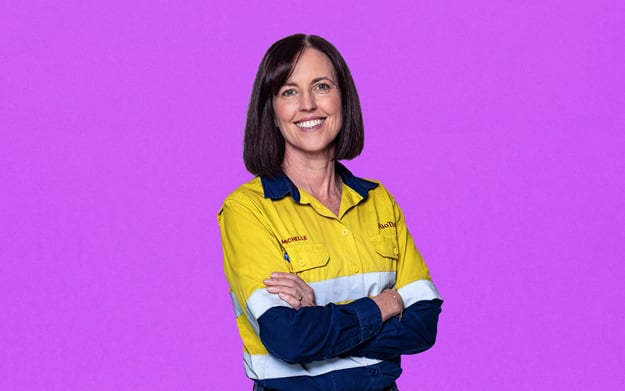
Changing perceptions: Showcasing the real opportunities in mining
A recurring theme in this year’s IWD Ambassador conversations has been the importance of showcasing the breadth of opportunities within mining, especially to those who might assume they “don’t fit”.
There are hundreds of roles that didn’t exist when I started. There are environmental scientists, community specialists, technologists, marine coordinators, HR practitioners, comms experts - the list keeps growing.”
And beyond the technical roles, leadership itself is transferable.
“If you show up, listen, learn, and lead with integrity, you can succeed here. You don’t need a mining degree to make a meaningful impact.”
The work, she says, is in normalising these stories - showcasing real people, real journeys, and real non linear pathways.
Driving positive change, one conversation at a time
For Michelle, driving positive change is not about big-ticket programs or sweeping transformations, though those have their place. Instead, she sees the greatest impact in the small, consistent moments that shape culture every day.
One powerful example is Rio Tinto’s annual Stop for Respect. Historically, the iron ore business only ever stopped operations when there had been a fatality. After the Everyday Respect report, the organisation made an unprecedented decision: to stop the entire business to reflect on what respect and inclusion mean, why they matter, and what each person can do to contribute.
“We’ve done it every year for the last five years,” she says. “It sets the tone. But then what matters is what happens after, the conversations in teams, the reflections in break rooms, the small shifts in behaviour.”
Over time, the approach has evolved. The early stops delivered sharp, confronting messages about unacceptable behaviour. Now, the focus is on the “everyday ripples” - the comments, assumptions, habits, and moments of inattention that shape someone’s experience at work.
“It’s about helping people understand impact, not just intent,” Michelle explains. “We all bring different contexts.
Something I think is fine might make someone else deeply uncomfortable. It’s not about right or wrong, it’s about recognising difference.”
As a leader on site, presence is her most important tool. Walking the floor. Building trust. Listening without agenda. Creating spaces where people can talk honestly.
“People won’t share what’s going on unless you’re visible and accessible,” she says. “Sometimes my only job is to be there.”
Respect, humanity, and kindness
While gender equity remains central to IWD, Michelle emphasises that respect and inclusion are not “women’s issues”, they’re human issues.
“This is about being a good human,” she says simply. “It shouldn’t be that hard, but sometimes it is.”
She often asks her team to start from a place of assuming positive intent. “We all jump too quickly to the worst interpretation. What if we paused, and assumed people are trying their best?”
That mindset, kindness, curiosity, and humanity, is at the heart of the culture Michelle strives to build.
The power of showing up
Reflecting on her career, Michelle returns to a piece of advice she often shares with emerging leaders:
“You don’t have to be perfect. You don’t have to know everything. You just have to show up.”
Show up with curiosity.
Show up with courage.
Show up willing to stretch yourself.
Show up willing to lift others.
And, importantly, show up willing to have the conversation.
“It’s the day-to-day moments that matter,” she says. “That’s where change really happens.”
Stay tuned as we continue sharing more inspiring stories celebrating women in mining.