

Exploring Iron Ore: Planting for the Future: Integrating Revegetation with Mine Planning to Reduce Closure Risk
As integrated mine planners and closure practitioners, we’ve seen how mine closure was historically often viewed as an afterthought in life of mine (LOM) planning, resulting in long-term costs and risks that outweigh short-term financial gains.
Although closure planning practices have improved, with many jurisdictions worldwide now legally requiring closure plans during the development stage of mine operations (IGF, 2021), mining companies that fully integrate closure into mine planning from the outset can maximise asset value while achieving positive environmental and social outcomes.
Early integration of closure planning into the operational phase of LOM plans allows for opportunities to reduce environmental and financial risks, reduce closure costs, maintain a social license to operate, and enhance landform stability, particularly when supported by targeted growth media (Figure 1) and revegetation trials.
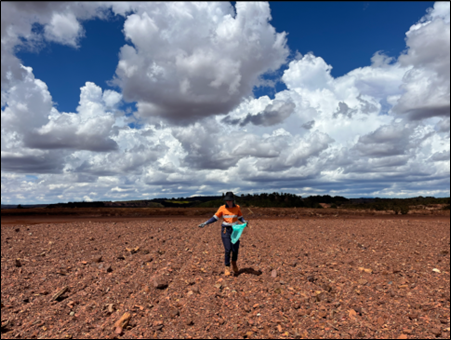
Figure 1: Seeding of a mine site growth media trial.
(Okane Archive, 2025)
Leveraging Integrated Mine Planning to Optimise Closure Outcomes
Every mine site presents unique environmental conditions, operational constraints, risk profile and is subject to varying state, territory, and federal regulatory frameworks and environmental laws. Due to these factors, mine closure is not a “one-size-fits-all” situation.
Successful closure plans require site-specific closure designs and strategies, developed through collaboration among a range of professional disciplines, in addition to local communities, Traditional Owners and regulators. These disciplines include mining engineers, geotechnical engineers, geochemists, and environmental specialists, amongst others. This integrated approach enables mining companies to develop adaptable mine plans that facilitate progressive rehabilitation and closure of mine landforms during operations.
How Can Revegetation Reduce Closure Risk?
An aspect that is often overlooked or underestimated in mine closure planning is the role of vegetation, and how it can help effectively manage complex challenges experienced in closure for mine site landforms, such as tailings storage facilities (TSFs) and mine rock stockpiles (MRSs). Below are some examples of how closure outcomes can be influenced by vegetation.
Physical stability: Where erosion is identified as a risk, vegetation can stabilise landform surfaces and improve structural integrity by binding soil particles with root networks and organic matter. Surface vegetation also alters runoff pathways and intercepts rainfall, reducing flow velocity and minimising erosion processes.
Chemical stability: Where there are acid and metalliferous drainage (AMD) risks, vegetation can aid in minimising this risk by reducing water infiltration. Through evapotranspiration, plants extract water from the soil and release it to the atmosphere, thereby lowering the volume of water available to infiltrate through to underlying landform materials. In turn, this reduces the mobilisation of contaminants to downstream or offsite receptors.
Water management: Revegetation can support stable drainage systems, contribute to passive water treatment processes, and enhance constructed waterways designed to maintain natural flow regimes and native ecological characteristics.
Cover system selection and performance: In Australian environments, where rainfall can be highly seasonal, store-and-release cover systems are commonly applied to support the closure of MRSs and TSFs. Vegetation is a critical functional component of these systems through regulation of soil moisture by means of water uptake and transpiration, thereby directly influencing cover performance and long-term stability.
Rehabilitation in alignment with post mining land use (PMLU) objectives: Whether the closure objective is to establish native vegetation (Figure 1) and ecosystems or productive land uses such as grazing, vegetation delivers essential functional benefits. These include providing habitat, supporting ecosystem or agricultural productivity, and improving biological soil health through increased organic inputs and microbial activity.

Figure 2: Native flower in mine site rehabilitation area in Western Australia.
(Okane Archive, 2025)
Optimising Growth Media for Successful Mine Site Revegetation
Successful vegetation requires a suitable growth medium to achieve the beneficial outcomes outlined above. To determine the appropriate growth media, some critical questions to ask are:
· Is there enough topsoil on site? Have alternative materials been identified and characterised?
· Where is topsoil located? Has it been placed strategically to maximise soil quality and minimise material movement costs and distances for final landform placement and construction?
· What condition is the topsoil in? Is the topsoil of suitable quality to support plant growth, or does it require amendments?
· If the available topsoil does require amendments, what type of amendments should be applied?
· Can the topsoil be mixed with mine rock and amended to make it suitable for vegetation and thereby increase available growth media volumes?
In conjunction with growth media trials, vegetation trials can be conducted to support selection of seed mixes, and test seed preparation and planting methods. Both growth media and vegetation trials can be utilised to increase knowledge and confidence in a proposed mine closure revegetation strategy. Combined trials have the added benefit of being more cost efficient and resource efficient than stand-alone trials.
For example, to further develop an iron mine’s closure knowledge base, Okane conducted field trials featuring several growth media plots with varying ratios of topsoil and mine rock. Following trial plot construction, amendments were applied to selected plots and diverse plant species, including locally native species, were seeded.
How Can Mine Plans Incorporate Growth Media and Revegetation Trials?
A proactive approach to optimising integrated mine and closure planning is undertaking growth media and revegetation trials during the operational phase of mine life. This smaller-scale testing allows for timely studies and adaptive management to build confidence in projected outcomes, and in the ability to meet the desired PMLUs. Growth media and revegetation trials can assist in the successful, scalable, safe and sustainable rehabilitation of mine landforms.
Each site’s revegetation needs should be tailored to aspects such as local climate region, landform types and geometries, growth media (material type, quality, and availability), vegetation required for the PMLU, cover system requirements, and completion criteria.
At Okane, we use a framework (Figure 3) for designing growth media and revegetation trials to support integrated mine operational and closure planning. This involves:
· establishing a strategic foundation;
· conducting growth media and revegetation field trials, including the characterisation of landform and rehabilitation materials;
· assisting in onsite trial preparation and revegetation implementation; and
· monitoring, reporting, and technical studies to support integrated LOM planning.
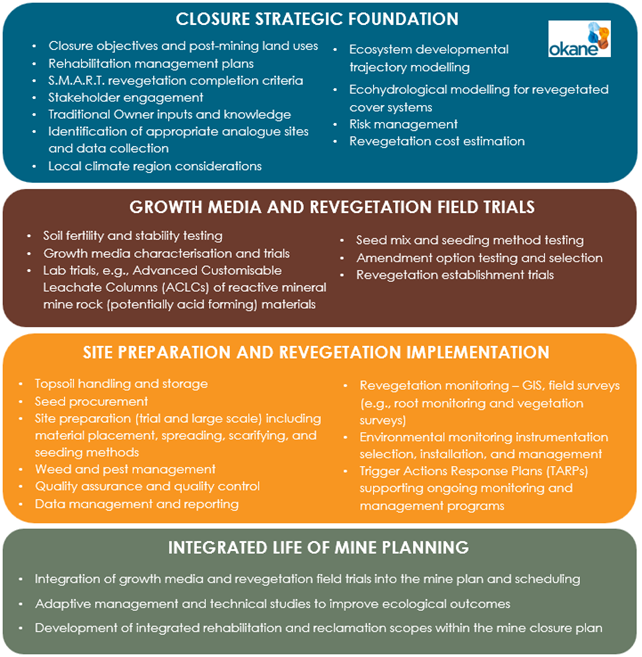
Figure 3: Okane’s framework for successful mine landform revegetation
The complexity of the knowledge and inputs required for successful revegetation, as outlined in the framework above, demonstrates that growth media and vegetation cannot be treated as a last-minute consideration. By planning for mine closure and PMLU early, mining companies can leverage time and interdisciplinary expertise to support landform rehabilitation through timely studies and well-designed closure trials.
Investing in growth media and revegetation trials during operations, either as part of progressive rehabilitation or stand-alone trials, offers many benefits, including:
· building confidence in the rehabilitation approach, enabling more accurate closure scheduling, cost estimation, and provisioning, while supporting regulatory approvals;
· reducing risk by minimising the likelihood of unforeseen or underfunded liabilities, such as avoiding major re-work during closure or post-closure;
· maximising available time for closure planning activities that may be lengthy, such as conducting technical studies, procurement and allowing for meaningful stakeholder engagement; and
· supporting closure objectives by increasing the likelihood that completion criteria and the PMLU can be met within desired post-closure timeframes.
Integrating closure planning into LOM planning allows for a more proactive and strategic operation. This approach provides mining companies with opportunities to manage and reduce environmental and financial risks, maintain a social license to operate, and successfully implement progressive rehabilitation and closure of mine landforms during operations.
To explore what growth media and revegetation trials could look like for your site, connect with our team at info@okaneconsultants.com.
References
Intergovernmental Forum on Mining, Minerals, Metals and Sustainable Development (IGF). (2021). Current status of mine closure readiness: Are governments prepared? IGF Resources.