

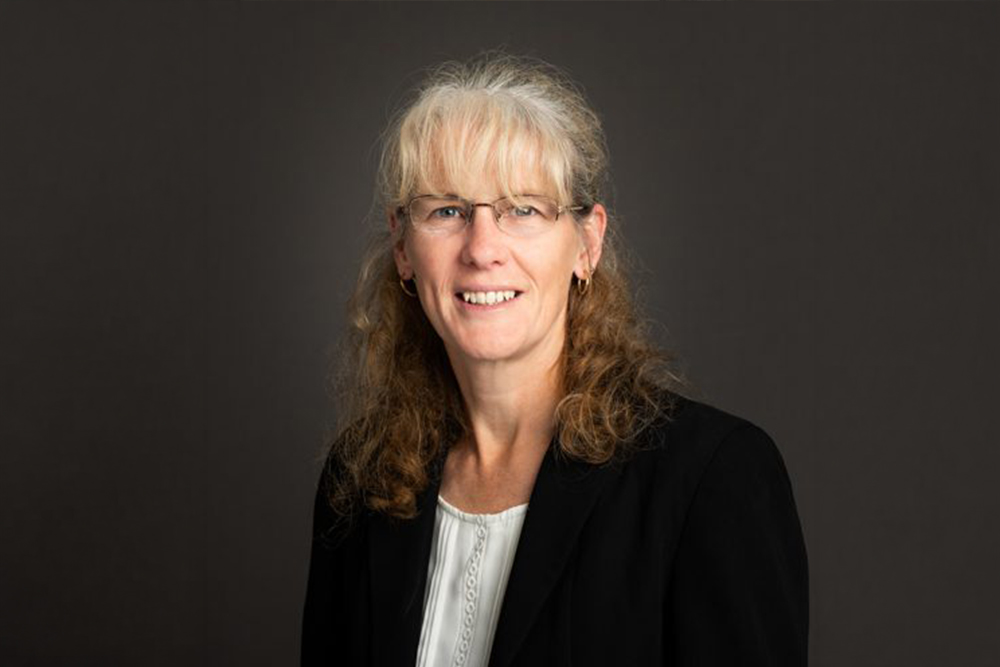
Fast Five with Professor Maureen Hassall

As the mining industry continues to evolve, how can organisations create safer, healthier and more resilient workplaces?
Ahead of #IMHS2026, we sat down with Maureen Hassall, Professor and Director of the Industry Safety and Health Centre at The University of Queensland's Sustainable Minerals Institute, to discuss some of the biggest challenges and opportunities facing mine health and safety today. From human-centred risk management and emerging technologies to the future of worker wellbeing, Maureen shares her insights on the changes needed to create safer and more sustainable mining workplaces.
1. After decades in industry and years of research, what do you believe is the biggest challenge facing mine health and safety professionals today?
We have a history of assuming safety is one “thing”, relying on subjective assessment of risk, deferring to flawed rules-of-thumb to decide what is appropriate and focusing on causal and event type analysis of incidents instead of determining why the required controls did not prevent the event.
If we are going to sustainably achieve zero fatalities we need to understand and leverage evidence-informed risk-based approaches with requisite competencies. We also need to put as much emphasis on work related illnesses and diseases as we do on injury prevention.
2. You advocate for human-centered approaches to risk management. What does that look like in practice, and why is it so important?
Mining is the only safety critical heavy industry that does not require or deploy human-centred approaches be used in the design and analysis of safety critical work. Human-centred design involves engaging with workers and designers to understanding safety critical work from a physical, cognitive, team and organisational perspective. The aim is to design the work environment, work systems and work activities in a manner that would allow workers to successfully detect, assess and respond to normal and abnormal operating situations. The aim is to design the work system to suit the range of worker capabilities and responses rather than focus on designing and training workers for an imagined one correct way.
3. What role do you see technology, AI and emerging tools playing in the future of mine health and safety?
Advanced technologies including AI will have an increasing presence in mining. “Not-normally-manned” operations will be emerging in the near future. This changes the nature of the health and safety risks workers are exposed to in terms of locations of risk, scale of impact and timeframes from deviation to incident. Emergent and black-box technologies, such as AI, also change our ability to fully understand, test and assess functionality and its potential socio-technical impacts.
4. Looking ahead, what is one change you hope to see across the mining industry in the next decade when it comes to safety, health and wellbeing?
The change I hope to see is the achievement of inclusive, rewarding work for a diverse workforce. This will involve consideration of truly flexible hours and allocation of work that matches peoples’ preferences and capabilities as well as truly tackling and controlling the safety, occupational health and psychosocial risks that adversely impact worker wellbeing.
5. Who should see your presentation at AusIMM's International Mine Health and Safety Conference this October, and what can they expect?
My presentation will be about intriguing insights and industry challenges. I will be sharing some interesting meta-analysis of industry data and some challenging findings from recent research. I will be sharing these at the conference and seeking insights.