
Investigating tailings as a resource: Nils Steward FAusIMM presents at IMARC

In late January 2022, the International Mining and Resources Conference (IMARC) will be run as a hybrid event, kicking off the year’s events calendar with a summer IMARC, prior to the full-scale international event in October. Attendees will be welcomed in-person to the Melbourne Showgrounds with international attendees from more than 130 countries joining online. AusIMM is a founding partner of IMARC, helping to bring together global mining leaders and experts to connect and discuss technology, finance and the future.
A number of AusIMM members are featuring in the program, and we sat down with Nils Steward FAusIMM to discuss the key insights he’ll be delivering at the upcoming event. 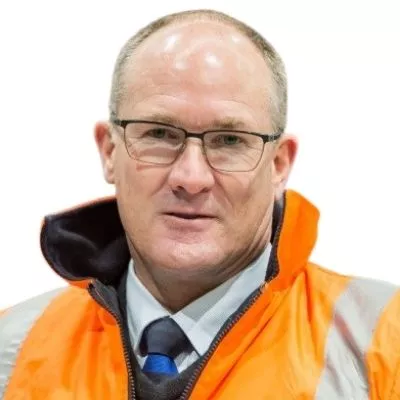
A key element of your work is delivering innovative solutions to the sector, and your presentation title ‘Investigating tailings as a resource’ sounds intriguing. What are you planning to highlight in your presentation at IMARC 2022?
There is a global focus on the safe and stable storage of tailings that have been produced through the metallurgical process of mineral recovery. However, storage means that we do nothing with the tailings. The opportunity to utilise tailings in ways that reduces the stored component, or remove it, has come of age. It’s time to investigate tailings as a resource and not a waste product.
I hope to shine a light on those opportunities that have always been with us, as well as those that stretch our vision and capability in respect to using tailings. In doing this, we can see the opportunities in job creation, environmental and social benefits that mining can bring.
What new technologies are currently shaping how tailings are managed in the sector? Are there exciting breakthroughs?
To refashion a phrase from Roman writer Pliny the Elder: ‘Mining always brings us something new’. I have been involved in the mining industry since the 1980s and it has always been exciting in the breadth of technology that has been investigated to bring about change and improvements. Sometimes it does not look like that from the outside, but time and effort is constantly being spent on delivering innovation in improved outcomes whether in operations or in safety.
While the main focus in tailings management appears to be dewatering, for both stability and water recovery, it is by no means the only agenda that the mining industry is engaged in. The next few years are going to see significant changes in tailings management both in storage and utilisation.
In 2020 the Global Industry Standard on Tailings Management was launched. How is this shaping the way companies and professionals approach tailings management?
The Standard on Tailings Management is a significant step forward to bring consistency in the lifecycle of tailings management. This includes the issues of community and the interaction of a tailings storage facility (TSF) with all aspects of community life, whether environmental or economic. The strength of the document is how it assigns responsibility for the management and operations of a TSF from construction to monitoring.
However, like every document, it has to be delivered on in practice, and in the current environment, with so much focus on TSFs, this is likely to be the outcome which will effectively benefit all parties from the miner to the community.
What are you most excited to discuss and learn about at IMARC?
I am always interested in what the majors bring to IMARC and where their focus is for the future. The position of Australian states and territories with regard to mining activity and regulation will be critical to future activity and investment, and the update by smaller miners will give us a feeling for the health of mining in Australia and globally.
The discussions on decarbonisation and specifically the introduction of hydrogen is exciting and in many ways world leading.
Otherwise I hope that Weir and our presentation of a vision for the future of integrated tailings management will ignite a greater discussion.
IMARC 2022 runs from 31 January – 2 February 2022 in Melbourne and online. Find out more about IMARC 2022 and register now.