

Electrifying Mining: As diesel costs rise, the future is already here.

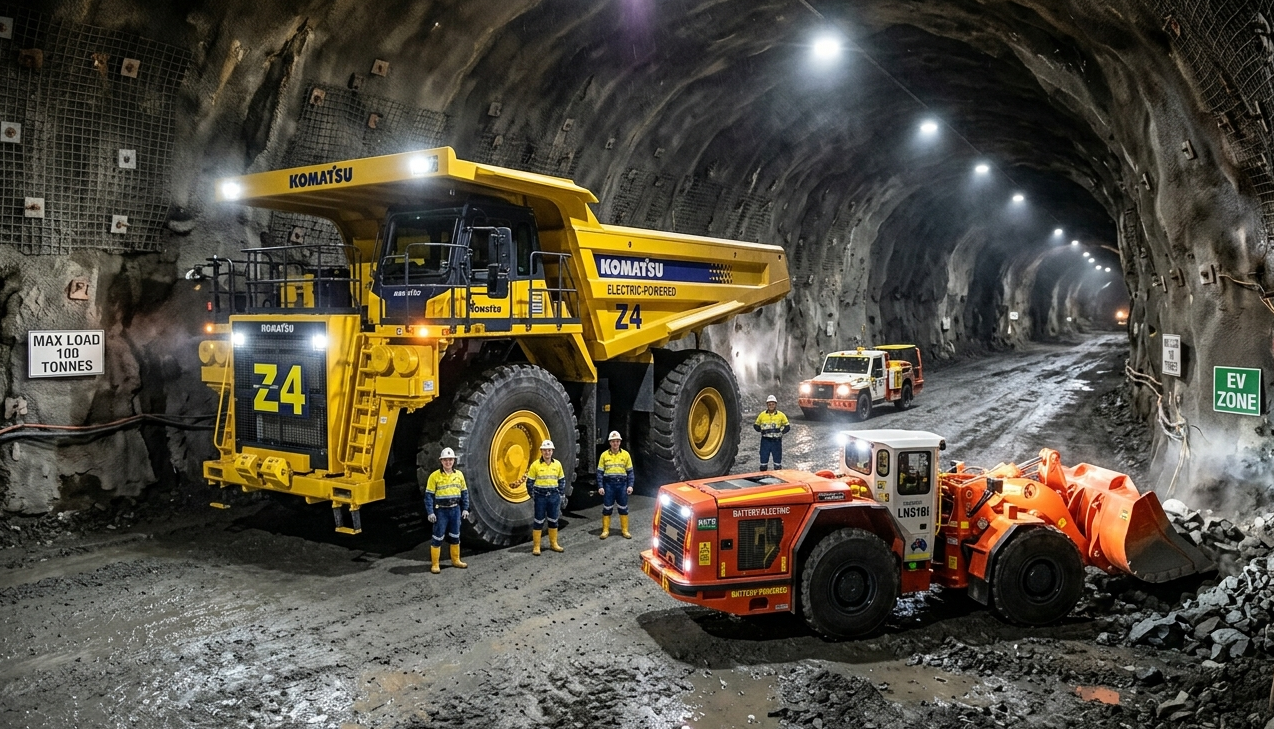
The global mining industry is at an inflection point. Electrification has moved beyond ambition and into execution no longer confined to pilot programs or innovation agendas, but actively reshaping operations across the world. From underground hard rock mines to large-scale surface operations, companies are transitioning toward battery electric vehicle (BEV) fleets, driven by a convergence of environmental imperatives, operational efficiencies, and workforce safety priorities.
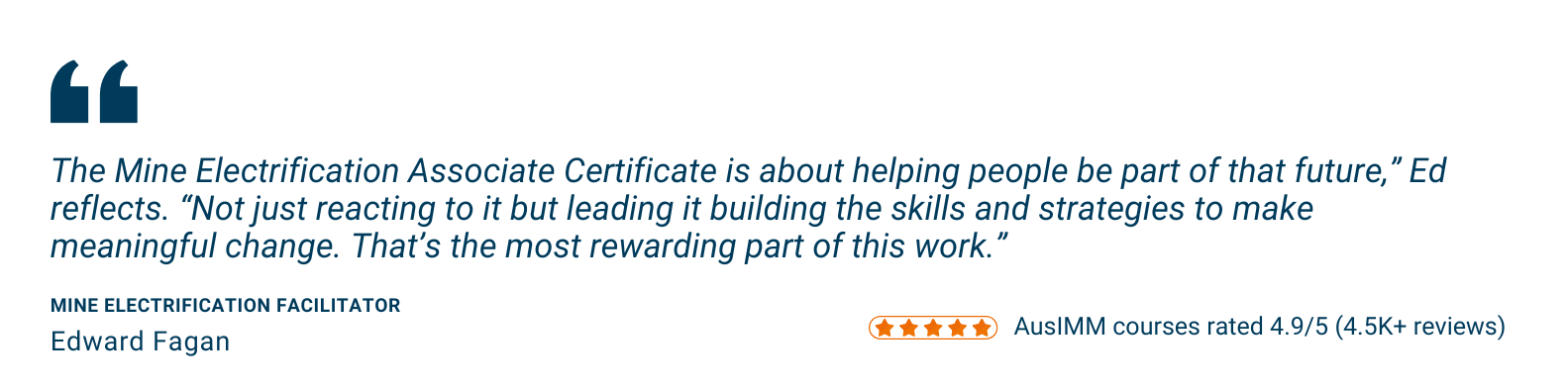
As Ed Fagan, facilitator of the Mine Electrification Associate Certificate, succinctly puts it:
Yet beneath this momentum lies a more complex reality. Electrification is not a simple equipment upgrade. It is a transformation one that demands far more than capital investment in new machinery. It requires strategic clarity, systems thinking, and, above all, leadership.
Beyond replacement: Rethinking the mining system
A persistent misconception continues to slow progress across the sector: the belief that BEVs can serve as direct replacements for diesel equipment.
This distinction is critical. Electrification alters the very architecture of mining operations. Charging infrastructure must be designed with precision. Energy supply and load management become central to operational continuity. Maintenance regimes evolve, introducing new requirements around battery lifecycle management and high-voltage safety. Workforce capability must be redefined.
In short, electrification is not a single decision it is an interconnected system of decisions.
Tangible gains, real impact
Despite the complexity, the benefits are both measurable and compelling.
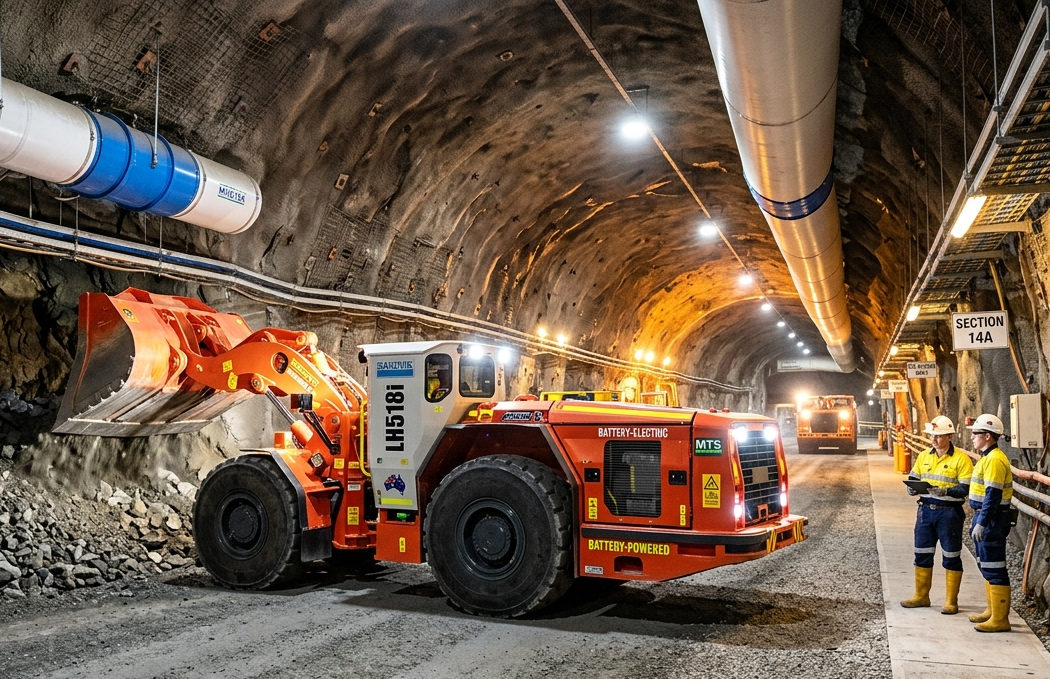
In underground environments, where diesel equipment has long dictated ventilation requirements, the introduction of BEVs is transforming cost structures. Reduced emissions directly translate into lower ventilation demand, delivering significant energy savings. At the same time, the human impact is immediate quieter operations, reduced heat, and improved air quality contribute to safer, more productive working conditions.
Complexity as the true barrier
If the benefits are clear, why do so many organisations struggle to scale beyond initial trials? The answer lies not in the technology itself, but in the capability required to implement it effectively. Electrification introduces a new layer of operational complexity. Charging schedules must align with production cycles. Infrastructure investments must be carefully staged. Workforce training must keep pace with technological change. Safety protocols must evolve. And perhaps most critically, all these elements must function as a cohesive whole.
Bridging the capability gap
Across the industry, professionals are increasingly being asked to make decisions that span engineering, operations, finance, and workforce management. Questions around infrastructure readiness, fleet transition timing, and risk mitigation are becoming central to strategic planning. Yet many organisations lack a structured framework to guide these decisions. This is precisely where the Mine Electrification Associate Certificate plays a defining role.
Developed by AusIMM in collaboration with industry experts, the course is designed to equip professionals with the knowledge and confidence to lead electrification initiatives. Delivered over five weeks in a flexible, 100% online format, it offers up to 20 professional development hours and a comprehensive, industry-aligned curriculum.
A holistic approach to modern mining
What distinguishes the Mine Electrification Associate Certificate is its breadth. Rather than focusing narrowly on equipment, it addresses the full ecosystem of electrification battery technologies, charging infrastructure, safety systems, mine design adaptation, and organisational change. Participants engage with real-world case studies that reveal both success factors and common pitfalls, enabling them to translate theory into practice.
Equally important is the course’s accessibility. It has been designed for a diverse audience from mine managers and engineers to safety professionals and early-career practitioners.
The human dimension of electrification
While technical considerations often dominate discussions, the success of electrification ultimately hinges on people. Workforces must adapt to new technologies, new processes, and new ways of thinking. Maintenance teams must develop new competencies. Operators must build confidence in unfamiliar equipment. Leadership must align stakeholders across the organisation.
“Another common challenge is underestimating the change management effort,” Ed explains. “Getting your workforce on board, adjusting workflows, and integrating new metrics are all really key to success.”
Without this alignment, even the most advanced technologies can fail to deliver their intended value.
Learning from early adopters
The experiences of early adopters reinforce a consistent message: success is not accidental it is planned. Some operations have unlocked additional value through second-life battery applications, while others have achieved significant reductions in cooling and ventilation costs. At the same time, these organisations have highlighted the importance of early stakeholder engagement, rigorous planning, and a willingness to adapt.
Leading the future of mining
Electrification represents one of the most significant opportunities for innovation in the mining industry today. It offers a pathway to reduced emissions, improved operational efficiency, and enhanced working environments. More importantly, it challenges organisations to think differently to move beyond incremental change and embrace systemic transformation.
For mining professionals, the question is no longer whether electrification will shape their operations. It already is. The real question is whether they are prepared to lead.
The future is already here
Step into a growing number of mining operations today, and the shift is unmistakable. Electric equipment moving through underground drives. Reduced noise. Cleaner air. Teams adapting in real time to a new operational paradigm. This is not a vision of what mining could become. It is what mining is becoming and for those equipped with the right capabilities, it represents not just a challenge but a defining opportunity.
Ready to lead the charge? Enrol in the Mine Electrification Associate Certificate today.
Watch the video below for more course details