
Why your next multi-million-dollar project might fail before the first drill hits the ground
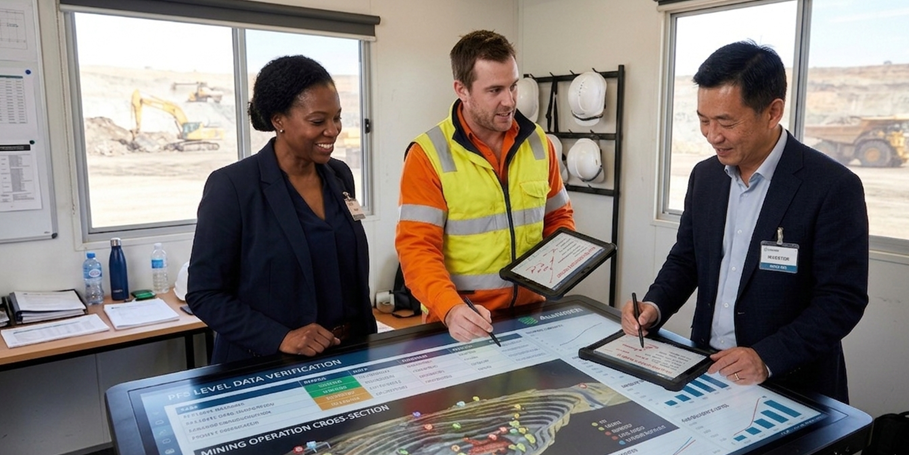
The success of any resource project is not determined at the point of commissioning, but rather in the rigorous discipline applied during the study phases. As the industry faces increasing complexity in decarbonization, remote operations, and stakeholder expectations, the requirement for a standardized, high-quality approach to study management has never been more critical.
Lisa Park, Study Manager with Glencore’s Growth and Decarbonization team and a facilitator for AusIMM’s Study Processes for Resource Projects course, recently shared her insights on the common pitfalls and essential frameworks that define a successful project journey.
The gap between expectation and delivery
One of the most persistent challenges in project leadership is the misalignment of stakeholders. It is a common, yet avoidable, scenario: a project reaches completion only for stakeholders to realize the outcome does not match their initial vision.
Beyond communication, there is the technical integrity of the study itself. Throughout their careers, course facilitators Lisa Park, Geoff Deans, Irena Ivanova, Evan Roberts and Karl van Olden have observed studies claiming to be at a certain level of maturity (such as Pre-Feasibility) when the underlying technical data simply does not support the claim. This "technical inflation" often leads to failures during the implementation and execution phases.
Safety: The desktop-to-field continuum
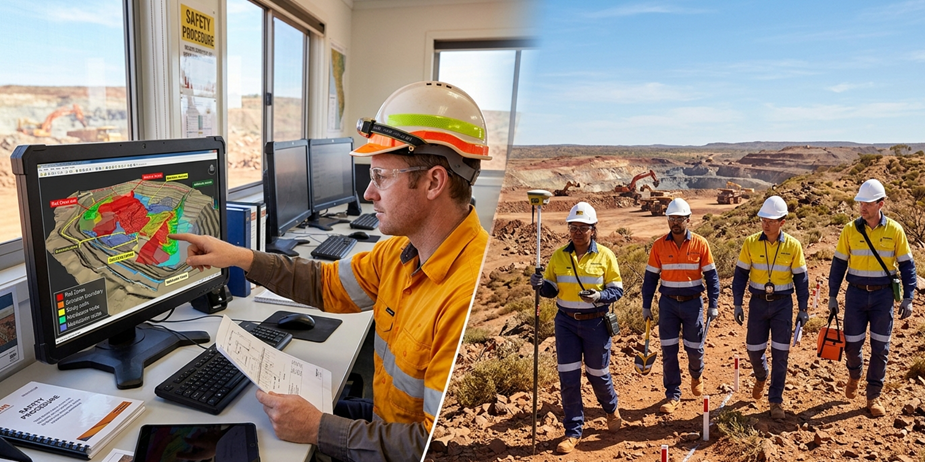
Health and safety (H&S) are often associated with the "boots on the ground" execution phase, but for a seasoned study manager, H&S begins at the desktop. Risk mitigation starts before a single team member visits a remote site. This includes establishing procedures for areas without mobile coverage and ensuring teams are trained for site-specific challenges. Park recalls a critical incident where a consultant became ill several kilometres from their vehicles in a "no-coverage" zone.
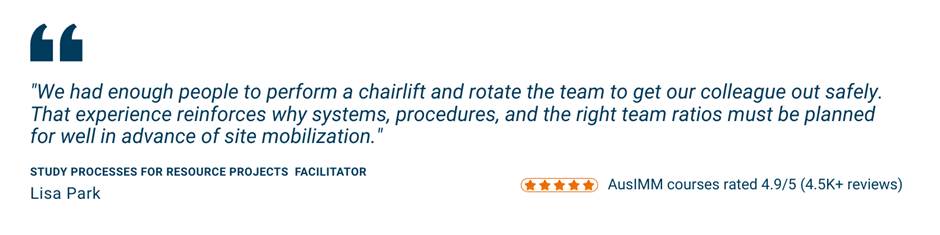
In this scenario, the "desktop planning" saved a life. Because the team had:
- Sufficient Manpower: Enough people to perform a manual chairlift and rotate carriers.
- Strategic Communication: A plan for a subset of the team to sprint ahead and navigate vehicles as close as possible.
- Specific Training: Localized knowledge for specific, high-risk locations.
This level of preparedness is a core tenet of the AusIMM study process. The course teaches that H&S is a culture that must be baked into the study from the very first site visit.
Solving the "Technical Inflation" problem
The facilitators of this course Lisa Park, Geoff Deans, Irena Ivanova, Evan Roberts and Karl van Olden have collectively seen the fallout of "failed" studies. These failures usually stem from one of two things:
- Execution Failure: The study was good, but the implementation was poor.
- Data Failure: The study claimed to be at a Feasibility level, but the underlying technical data (the "minimum requirements") simply wasn't there.
The Study Processes for Resource Projects course was born out of a desire to stop this trend. The facilitators have developed a framework for the minimum requirements for every phase of a study.
Defining the Minimum Requirements
To address the inconsistencies in study quality across the sector, AusIMM’s Associate Certificate Course focuses on defining the minimum requirements for the three key phases of a study:
- Scoping: The initial evaluation to determine the potential viability of a resource.
- Pre-Feasibility (PFS): A more detailed assessment to select the preferred technical and economic method.
- Feasibility (FS): The final, comprehensive study used to support a final investment decision (FID).
By establishing these benchmarks, the course empowers professionals to assess whether a study is truly fit-for-purpose or if it requires further technical rigor before progressing.
A course for the entire value chain
A common misconception is that study process training is only for the engineers writing the reports. Lisa is quick to correct this:
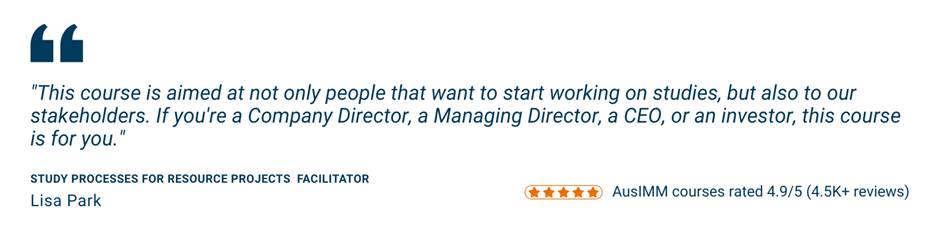
For the Executive and Investor, the course provides the "smoke detectors", the ability to look at a project update and recognize when the technical information is insufficient to support the claims being made. For the Technical Specialist, it provides the roadmap to move from a "desktop level" idea to a project that is safe, viable, and ready for the ground.
Join the next intake today.
Delivered by a team of world-class consultants with decades of experience in delivering and reviewing global studies, this course provides the additional resources and templates needed to excel in the Australian and international resource markets. Join Lisa Park and the team of expert facilitators in the next intake of the Study Processes for Resource Projects associate certificate.
Hear it from Lisa Park