

How is AI transforming Metal Accounting for the modern mine? | AusIMM
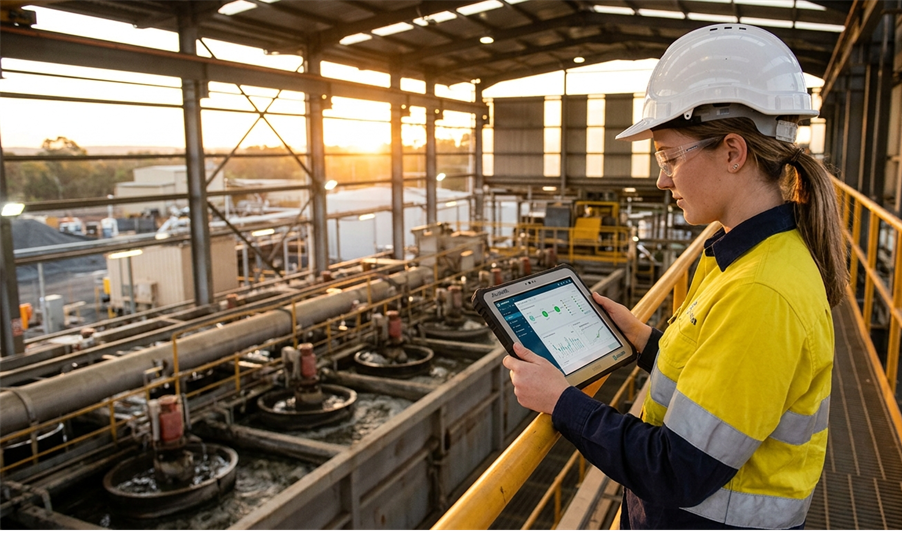
In the rapidly evolving landscape of mineral processing, the role of the metallurgist is undergoing a profound digital transformation. A recent webinar hosted by the AusIMM, the organisation behind the industry-leading Metal Accounting Course | Professional Certificate | AusIMM featuring John Vagenas, Managing Director of Metallurgical Systems, explored how artificial intelligence (AI) and advanced process automation are reshaping metallurgical accounting and what this means for the careers of future professionals.
The metallurgist vs. The data scientist
John begins with a compelling distinction: while a data scientist has the tools to check every "haystack," a metallurgist knows which haystack to check first. The goal of modern systems is not to replace the metallurgist but to provide them with the same "all-access" capabilities as a data scientist. This ensures robust data verification, allowing them to verify every data point with the added benefit of subject matter expertise.
AI as a pipeline, not a product
One of the most significant misconceptions in the industry is that AI is a single, plug-and-play application. AI is a pipeline that is highly dependent on the layers of data beneath it. This requires rigorous data organisation and data standardisation at the instrument level to ensure the contextual data, such as how a sample was taken, is preserved alongside the raw numbers.
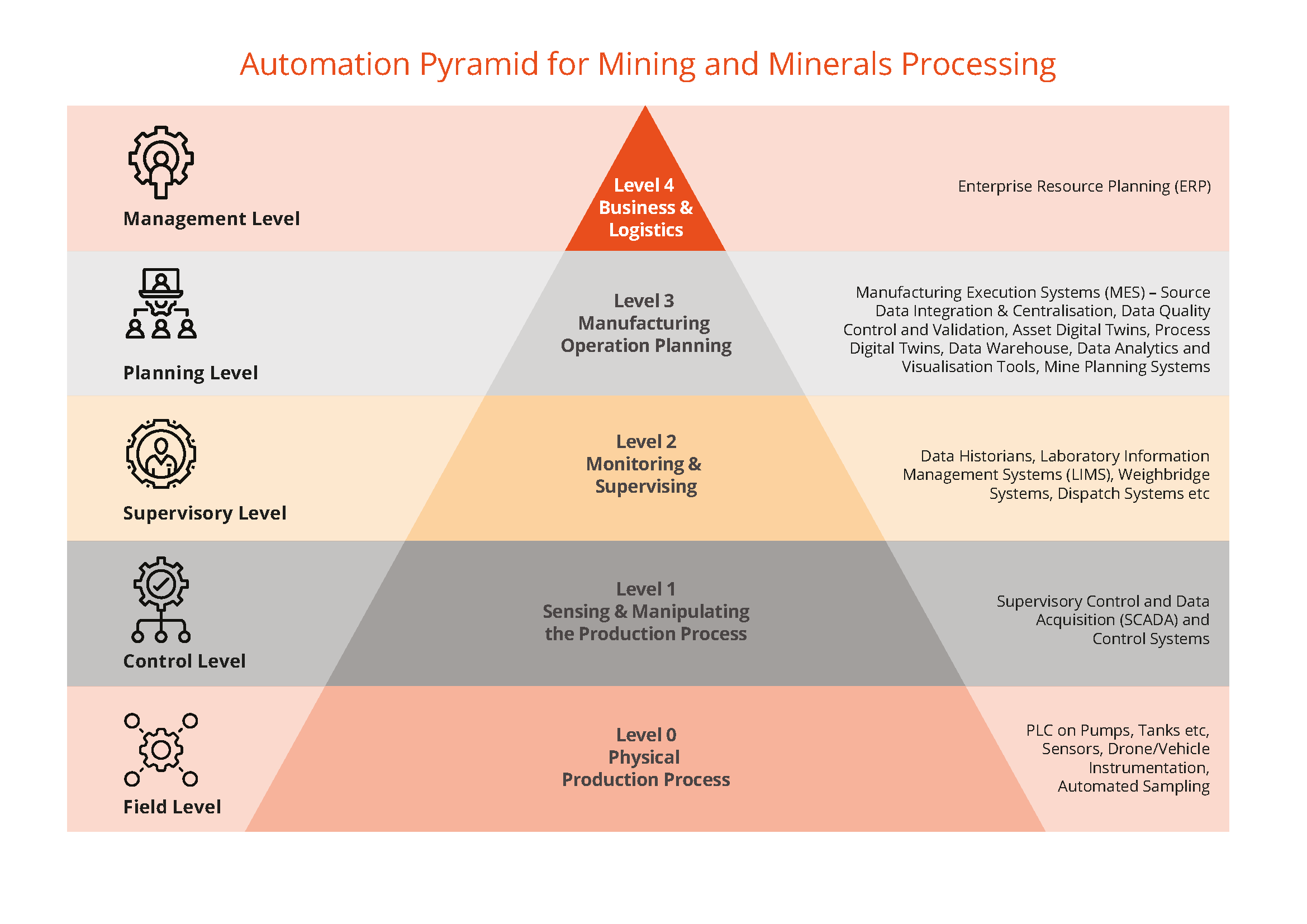
Navigating the automation pyramid
To understand how machine learning integrates into a site, we must look at the automation pyramid, a hierarchy of technology that organises data flow.
- Level 0 (Field): AI use cases are already used here on "edge devices" for visual analysis, such as monitoring bubbles in concentrators or truck-fill levels.
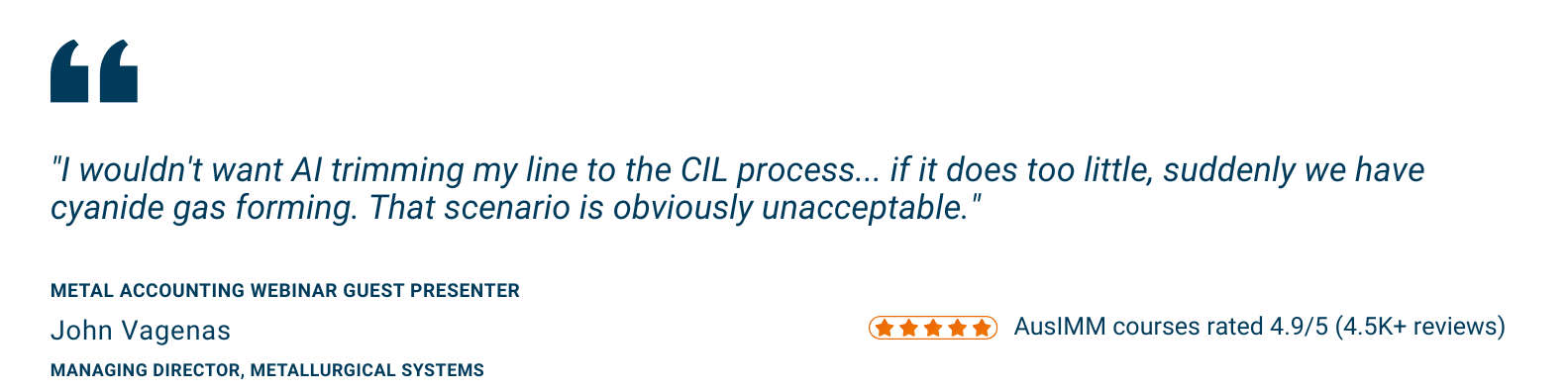
- Level 1 (Control): While expert control systems have existed for years, they often lack the ability to "learn" from data. Applying AI here remains risky due to potential hallucinations or errors that could lead to safety hazards, such as the formation of cyanide gas in gold plants.
- Level 2 (Monitoring & Supervising): Systems like SCADA and Data Historians are used to monitor the physical process in real-time and provide the first layer of data verification by tagging samples with essential context (like whether a measurement was a grab or a composite).
- Level 3 (Planning): This is where AI excels. By operating in a "sandbox," it allows engineers to analyse plant performance objectively before implementation.
- Level 4 (Business & Logistics): This level is the "wallet" of the operation, where Corporate ERP systems manage high-level logistics, global inventory, and financial reporting. While Level 2 ensures the "plumbing" of the data pipeline is clean, Level 4 uses that data to make strategic commercial decisions, such as forecasting market trends or assessing quarterly Plant performance.
The "scorecard" and the garbage in, garbage out trap
Metallurgical accounting serves as the site's scorecard, linking process areas to show how much value was created. However, feeding inaccurate monthly numbers into an objective AI analysis will only generate "rubbish" data.
Several barriers currently prevent AI from adding value in metallurgy:
- Legacy Technology: Over-reliance on spreadsheets is a major hurdle. Manual spreadsheets lack the governance frameworks and data-processing power required for machine learning.
- Statistical Assumptions: Many sites use the residual sum of squares to distribute errors, but in practice, they often assign zero error to the product. This turns the reconciliation into a "goal seek" that simply back-calculates the feed, potentially masking losses worth hundreds of millions of dollars. To mitigate these risks, professionals are increasingly turning to structured training like the Metal Accounting Course | Professional Certificate | AusIMM to master statistical methods and bias detection.
- Poor Inventory Practices: Inaccurate physical inventory timing can skew operational efficiency metrics.
The power of the process digital twin
To overcome these barriers, Verhienes advocates for a process digital twin, a dynamic model that tracks volumes, chemistry, and time-lag dependency. This mining technology allows for the creation of synthetic data to train AI systems when physical lab samples are limited.
A digital twin also allows for the creation of synthetic data. Since AI systems require millions of samples to learn effectively and most labs only provide a few per day synthetic data can be used to "train" the AI on how the plant responds to specific changes.
Case study: The "rogue" water line
The value of this approach was demonstrated in a real-world case study involving a hydraulically constrained circuit. By comparing measured results against calculated results from a digital twin, engineers noticed a clear bias: the system was more dilute than it should have been. While the site initially blamed the technology, the data eventually forced them to find an undocumented unmetered water line that operators had added to prevent a thickener from bogging. AI can prioritise this kind of analysis to detect undocumented process changes automatically.
Future-proofing your career
For the "future metallurgist," the message is clear: technology enables you to do the job you signed up for. Instead of spending hours managing complex spreadsheets, metallurgists should focus on:
- Governance: Implementing structures that make data transparent and auditable.
- Adopting Technology: Moving toward dedicated software solutions rather than the "build it ourselves" trap.
- Transparency: Using data to advocate for projects, demonstrating whether a shift toward maximum production truly balances against the resulting drop in efficiency.
Metallurgy is more rewarding when the right tools are in place. By embracing transparency and moving beyond legacy assumptions, the next generation of metallurgists can ensure they aren't just checking haystacks; they're finding the needles. As systems become more automated, the role of the human expert becomes even more critical. Professionals must be equipped to validate and interpret the massive influx of data.
To support this, programs like the AusIMM Professional Certificate in Metal Accounting provide the grounding in the Amira Code and statistical methods necessary to bridge the gap between traditional metallurgy and the AI-driven future.
AI in Metal Accounting Webinar